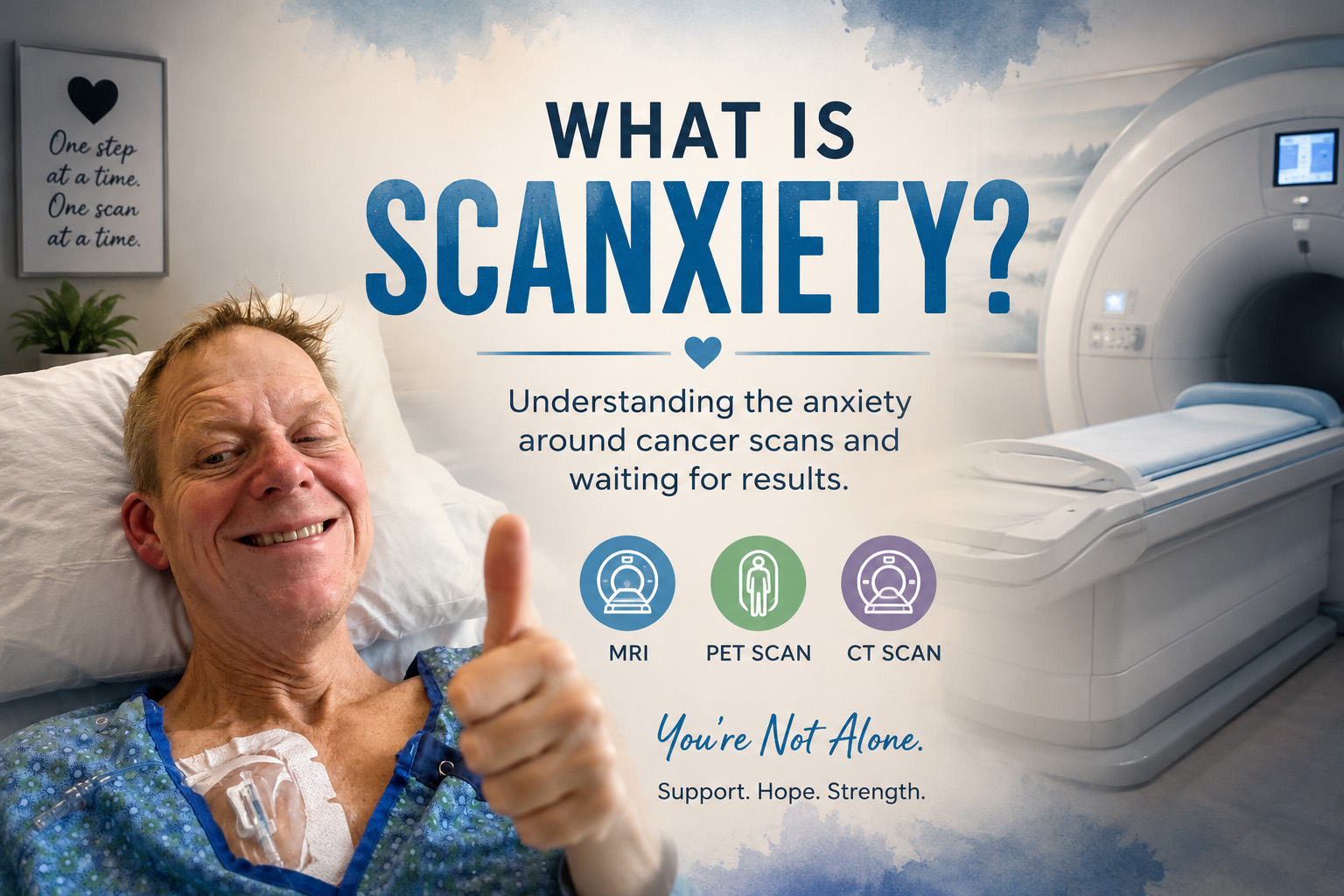
What Is Scanxiety? Meaning, Symptoms & Cancer Scan Anxiety
Scanxiety means the anxiety, fear, or emotional distress that can happen before, during, or after a medical scan, especially while waiting for the results. The word scanxiety combines “scan” and “anxiety” and is commonly used by cancer patients to describe the worry surrounding CT scans, PET scans, MRIs, and other imaging tests.
For someone living with cancer, a scan can represent much more than another medical appointment. The results may show whether treatment is working, whether cancer has remained stable, or whether it has grown or spread. That uncertainty can make the days leading up to a scan and the wait for results particularly stressful.
Scanxiety can affect people differently. Some experience trouble sleeping, racing thoughts, difficulty concentrating, physical tension, or repeatedly checking their patient portal for results. Others may feel relatively calm until the day of the scan or the appointment when the results are discussed.
For me, scanxiety became very real after my cancer reached Stage 4. Every scan carried questions I couldn’t answer until the results came back. Even after receiving encouraging results, the anxiety didn’t completely disappear before the next scan. That’s one reason I created Wayne’s Cancer Journey—to share what I’ve learned from actually living through these moments.
Scanxiety Meaning: What Does Scanxiety Mean?
The meaning of scanxiety is simple: it combines the words “scan” and “anxiety.” The term describes the fear, worry, or stress people may experience surrounding medical imaging and the results that follow.
Although scanxiety is commonly associated with cancer patients undergoing CT scans, PET scans, and MRIs, the anxiety is often less about the scan itself and more about what the results could reveal. For someone living with cancer, those results may answer critical questions about whether cancer has shrunk, remained stable, grown, spread, or returned.
In other words, when someone talks about having scanxiety, they are describing the emotional uncertainty that can come with waiting for a medical scan and its results.
Is Scanxiety Real? What Scientific Research Says
Scanxiety is more than a word cancer patients use to describe nervousness before a CT scan, PET scan, or MRI. Researchers have studied scan-related anxiety and its effects on people living with cancer and those who have completed treatment.
A 2021 scoping review examining 57 studies found that scanxiety was common, although its reported prevalence varied considerably depending on how anxiety was measured. Studies using descriptive measures reported moderate to severe scanxiety in approximately 4% to 28% of participants.
Researchers have also investigated ways to reduce scanxiety, including relaxation exercises, distraction techniques, patient education, and psychological support.
A separate 2023 review examined 36 studies involving adults with cancer or a history of cancer, highlighting the importance of understanding scanxiety and developing effective approaches to managing it.
What does this mean for cancer patients?
If you feel anxious before a scan or while waiting for results, scientific research recognizes your experience. You are not alone, and strategies may help you cope with uncertainty.
As someone living with Stage 4 cancer, I have experienced scanxiety firsthand. Understanding the research and developing my own preparation routine has helped me approach imaging appointments with greater confidence.
Scientific References
- Scanxiety: A Scoping Review About Scan-Associated Anxiety (2021)
- Scanxiety Among Adults With Cancer: A Scoping Review to Guide Research and Interventions (2023)
Why Is Scanxiety So Common in Stage 4 Cancer?
For people living with stage 4 cancer, imaging tests are far more than routine medical appointments. Every CT scan, PET scan, or MRI has the potential to answer life changing questions. Has the treatment worked? Has the cancer remained stable? Has it spread? Are there new tumors? Those unknowns can create intense emotional stress long before the scan begins.
Unlike patients who complete treatment and move on, many people with metastatic cancer undergo imaging every few months throughout their lives. Each scan becomes another checkpoint, another moment when months of hope and hard work can seem to rest on a single radiology report. That repeated cycle of anticipation and uncertainty is one of the biggest reasons scanxiety is so common.
Waiting for scan results is often the most difficult part. Some patients receive answers within hours, while others wait days or even weeks. During that time, it is common to imagine worst case scenarios, replay every ache or pain, lose sleep, struggle to concentrate, or feel emotionally exhausted. These reactions are normal and experienced by millions of people facing cancer.
For many patients, scanxiety extends beyond fear of the scan itself. It is the fear of what the results may mean. A scan can determine whether treatment continues, changes, or stops. It can affect future plans, family conversations, work, finances, and hope itself. That is why scanxiety is more than simple nervousness. It is the emotional weight of living with uncertainty while fighting a life threatening disease.
If you are experiencing scanxiety, you are not alone. Recognizing these feelings is the first step toward managing them. Many cancer patients find that support from family, friends, their medical team, counseling, faith, mindfulness, exercise, or connecting with others who understand can help reduce the emotional burden while waiting for the next scan.
Free Download: CT Scan Week Survival Checklist
Preparing for a CT scan can be one of the most stressful parts of the cancer journey. Download my Free CT Scan Week Scanxiety Guide for practical checklists, questions for your oncologist, a CT scan results log, and encouragement from a stage 4 cancer survivor.
Stage 4 Cancer Is One of the Most Misunderstood Diagnoses
Many people assume a stage 4 cancer diagnosis means there are no treatment options or no hope. The truth is much more nuanced. Advances in immunotherapy, targeted therapy, precision medicine, and supportive care have changed what it means to live with metastatic cancer. Understanding the facts can help replace fear with knowledge and empower you to make informed decisions about your care.
What Causes Scanxiety?
Scanxiety is caused by the uncertainty that surrounds cancer imaging and the emotional impact of waiting for answers. For many people living with stage 4 cancer, every CT scan, PET scan, or MRI has the potential to reveal whether treatment is working, the disease is stable, or the cancer has progressed. Because those results can influence treatment decisions and long term outlook, it is natural for anxiety to increase before, during, and after each scan.
Several factors can contribute to scanxiety
Although every person’s experience is unique, several common factors contribute to scanxiety, the anxiety many cancer patients experience before, during, and after CT scans, PET scans, and MRIs. For people living with stage 4 cancer, these emotions often become part of every follow-up appointment because each scan has the potential to influence treatment decisions and the course of the disease.
Fear of Cancer Progression
One of the most powerful drivers of scanxiety is the fear that the next scan will reveal bad news. Patients often worry that their cancer has grown, spread to another part of the body, or stopped responding to treatment. Even if they feel physically well, many understand that cancer can sometimes progress without causing obvious symptoms. As a result, it is common to wonder whether the imaging will tell a very different story than how they feel.
For someone living with stage 4 cancer, every scan can seem like a crossroads. A favorable report may mean continuing a treatment that is working, while unfavorable results could lead to discussions about changing medications, additional chemotherapy, radiation therapy, surgery, or participation in a clinical trial. The emotional weight of knowing that a single radiology report could influence the next chapter of treatment makes these fears completely understandable.
Waiting for Scan Results
Many cancer patients say the most difficult part of scanxiety is not undergoing the scan itself, but waiting for the results. Once the CT scan, PET scan, or MRI is complete, there is often nothing left to do except wait. That waiting period, whether it lasts a few hours, several days, or even weeks, can feel incredibly long.
During this time, the mind naturally searches for answers that do not yet exist. Every ache, cough, headache, or moment of fatigue may suddenly seem significant. Patients often find themselves replaying previous scan results, searching for reassurance online, or imagining worst-case scenarios. These thoughts can make it difficult to sleep, concentrate at work, enjoy time with family, or focus on everyday life.
The uncertainty can also create a feeling that life is temporarily on hold. Many people hesitate to make travel plans, celebrate milestones, or think too far into the future until they know what the scan reveals. This emotional limbo is one of the defining characteristics of scanxiety and one of the reasons it affects so many people living with cancer.
Previous Cancer Experiences
For many cancer patients, scanxiety is shaped by what has happened before. A previous CT scan, PET scan, or MRI may have revealed that the cancer had grown, spread, or returned after months or even years of successful treatment. Others may remember hearing words they never wanted to hear again, such as “new lesion,” “metastasis,” “recurrence,” or “progression.”
Because the brain naturally connects present experiences with painful memories, every future scan can trigger those same emotions. Walking into the imaging center, changing into a hospital gown, lying on the scanner, or even receiving the reminder phone call can bring back memories of previous diagnoses or difficult conversations with an oncologist.
Some patients describe this as developing a form of “muscle memory” for anxiety. They know exactly what the imaging process feels like because they have lived through it before. Even if previous scans have shown positive results, the fear of hearing bad news again can make every appointment emotionally exhausting.
The more significant the previous experience, the stronger the emotional response may become. Patients who have experienced cancer recurrence or disease progression often find that future imaging carries an added emotional burden because they know firsthand how dramatically a single scan can change a treatment plan or alter the course of their lives.
Frequent Imaging
Unlike many medical conditions that require only occasional testing, cancer often requires ongoing imaging throughout treatment and survivorship. For patients living with metastatic or stage 4 cancer, CT scans, PET scans, and MRIs may become a regular part of life every two, three, or four months.
While each individual scan may last less than an hour, the emotional impact often begins weeks beforehand and continues until the results are received. Just as one period of scanxiety begins to fade, another follow-up appointment appears on the calendar, restarting the cycle all over again.
Many patients find themselves measuring life between scans rather than between holidays or birthdays. They celebrate good scan results, breathe a temporary sigh of relief, and then gradually realize another imaging appointment is approaching. The cycle repeats over and over, creating a pattern of recurring anxiety that can become emotionally draining over months and years.
This constant cycle can make it difficult to fully relax. Even during periods when treatment is working well and the cancer remains stable, many patients quietly wonder how long the good news will last. As the next scan approaches, those questions often return with renewed intensity.
Fear of Treatment Changes
Every imaging study has the potential to influence what happens next. A scan may confirm that treatment is working exactly as planned, but it may also reveal that the cancer has stopped responding or has begun to grow again. That possibility alone can create tremendous anxiety.
Patients often worry about what new scan results could mean. Will they need another round of chemotherapy? Could additional radiation be recommended? Will surgery become necessary? Is it time to consider immunotherapy, targeted therapy, or enrollment in a clinical trial? Each of these possibilities carries its own uncertainties, risks, side effects, and difficult decisions.
For people who have already experienced challenging treatments or significant side effects, the fear may be even greater. Someone who previously developed severe neuropathy from chemotherapy, struggled through radiation treatments, or experienced complications from surgery may naturally worry about having to repeat those experiences.
Sometimes patients are not only afraid of bad news, they are afraid of what bad news might require them to endure next. That uncertainty can make waiting for scan results emotionally overwhelming because the future feels uncertain until the imaging is reviewed.
Loss of Control
One of the most frustrating aspects of scanxiety is the feeling of having very little control over the outcome. Patients can attend every appointment, follow every treatment recommendation, exercise regularly, eat a healthy diet, take medications exactly as prescribed, and still have no way of influencing what the scan will reveal.
That lack of control can be emotionally difficult. Many people are naturally problem solvers who want to take action when faced with uncertainty. During the waiting period, however, there is often nothing left to do except wait.
Patients also have little control over the timing of events. Imaging appointments may be scheduled weeks in advance. Scan interpretations depend on radiologists. Follow-up appointments depend on the oncologist’s schedule. Even when the scan has already been completed, patients often feel powerless as they wait for someone else to explain the results.
Learning to focus on what can be controlled, such as attending appointments, maintaining healthy habits, asking informed questions, leaning on a support system, and caring for emotional well being, can help reduce some of the helplessness that accompanies scanxiety.
Physical and Emotional Triggers
Sometimes scanxiety begins long before the imaging itself. Simply driving toward the hospital, walking through the entrance, or sitting in the waiting room can awaken memories from previous cancer treatments.
The familiar smell of antiseptic, the sound of medical equipment, the sight of hospital gowns, or hearing an MRI machine begin its loud rhythmic noises can immediately trigger feelings of anxiety. Receiving IV contrast for a CT scan, preparing for a PET scan, or lying motionless inside an MRI scanner may remind patients of surgeries, chemotherapy infusions, radiation treatments, biopsies, or the day they first received their diagnosis.
These reactions are not unusual. The brain naturally forms strong emotional associations between certain places, sounds, and experiences. For many cancer patients, the imaging center becomes closely connected with uncertainty, hope, disappointment, relief, and fear all at the same time.
Recognizing these triggers can be helpful because it allows patients to prepare for them. Deep breathing, calming music, prayer, meditation, visualization, or bringing a trusted family member or friend to appointments can make the experience feel more manageable.
Family and Future Concerns
Scanxiety is rarely only about the patient. For many people, the greatest fears involve the people they love and the future they hope to share together.
Parents wonder whether they will see their children graduate, get married, or start families of their own. Grandparents think about birthdays, holidays, vacations, and future memories they desperately want to experience. Spouses often worry about what life might look like if treatments stop working or if health begins to decline.
Cancer also creates practical concerns that become intertwined with every scan. Patients may worry about continuing to work, paying medical bills, maintaining health insurance, supporting their families, or keeping plans they have worked toward for years. Even simple decisions, such as scheduling a vacation or making holiday plans, can feel difficult when important scan results are only days away.
The uncertainty extends beyond the medical report itself. Patients are often asking much larger questions. Will I be able to continue living the life I’ve built? Will I be here for the next milestone? What does the future look like for the people I love?
These questions have no easy answers, which is why scanxiety reaches far beyond the imaging room. It touches relationships, dreams, responsibilities, and hope. Understanding that these concerns are shared by millions of cancer patients can help people realize they are not facing these emotions alone.
The Good News
Experiencing scanxiety does not mean you are weak, pessimistic, or losing hope. It is one of the most common emotional challenges faced by cancer patients. Recognizing what causes scanxiety is the first step toward managing it. With support from your medical team, family, friends, counseling, faith, and healthy coping strategies, many people learn to reduce the emotional burden and regain a sense of control while waiting for their next scan.
What Are the Common Symptoms of Scanxiety?
Scanxiety affects everyone differently, but the emotional and physical symptoms can begin days or even weeks before a scheduled CT scan, PET scan, or MRI. For many people living with stage 4 cancer, these feelings often intensify while waiting for scan results. Although scanxiety is not a medical diagnosis, it is a common and well recognized response to the uncertainty that comes with cancer imaging.
Many cancer patients experience a combination of emotional, mental, and physical symptoms, including:
Constant Worry About Scan Results
The most common symptom of scanxiety is persistent worry about what the next scan will reveal. Thoughts often center on whether the cancer has grown, spread, remained stable, or responded to treatment.
Difficulty Sleeping
Many patients struggle to fall asleep or stay asleep in the days leading up to a scan. Racing thoughts and uncertainty can make it difficult for the mind to relax, leading to fatigue and exhaustion.
Racing Thoughts
It is common to replay “what if” scenarios repeatedly. Patients may imagine the worst possible outcome or find themselves constantly thinking about upcoming appointments, test results, and future treatment options.
Increased Anxiety or Panic
Some people experience intense nervousness before entering the imaging center or while waiting for results. Symptoms may include a racing heart, sweating, trembling, shortness of breath, or feelings of panic.
Trouble Concentrating
Scanxiety can make it difficult to focus at work, enjoy hobbies, or stay present with family and friends. Many people find themselves distracted because their minds continually return to thoughts about their upcoming scan.
Irritability and Mood Changes
Living with uncertainty can affect emotions. Some patients become more irritable, impatient, or emotionally sensitive, while others withdraw from conversations or social activities.
Physical Symptoms
Emotional stress often produces physical symptoms, including:
- Rapid heartbeat
- Muscle tension
- Headaches
- Upset stomach or nausea
- Loss of appetite
- Fatigue
- Restlessness
- Shallow breathing
These symptoms are real and are caused by the body’s natural stress response.
Avoiding Conversations About Cancer
Some people avoid discussing their upcoming MRI, PET scan, or CT scan because talking about it increases their anxiety. Others may avoid scheduling activities until they know their scan results.
Feeling Emotionally Overwhelmed
Many patients describe scanxiety as feeling like their life is temporarily on hold. It can be difficult to make plans or look toward the future until they know what the scan shows.
When Scanxiety Becomes More Than Temporary Stress
Feeling anxious before cancer scans is normal. However, if anxiety begins interfering with sleep, work, relationships, treatment decisions, or your overall quality of life, it is important to tell your healthcare team. Your oncologist, nurse, counselor, or mental health professional can recommend strategies and resources to help you manage scanxiety.
Remember, experiencing scanxiety does not mean you lack courage or hope. It means you are facing uncertainty while living with cancer. Millions of patients experience the same emotions before every scan, and you do not have to face them alone.
Free CT Scan Week Scanxiety Guide
The days leading up to a CT scan can be filled with uncertainty and anxiety. Download my Free CT Scan Week Scanxiety Guide to receive step by step preparation checklists, practical strategies for managing scanxiety, questions to ask your oncologist, a printable CT scan results log, and personal encouragement from someone who has walked this journey.
Living with scanxiety does not mean you have to face it alone. While you may not be able to eliminate the uncertainty surrounding your next CT scan, PET scan, or MRI, you can learn strategies that reduce stress, improve emotional well being, and help you regain a sense of control.
There is no single solution that works for everyone. Some people find comfort in prayer or meditation, while others benefit from exercise, spending time with loved ones, speaking with a counselor, or connecting with other cancer patients who understand exactly what they are experiencing. The key is finding healthy coping strategies that work for you.
Many cancer patients discover that preparing mentally before a scan, limiting time spent searching the internet, staying physically active, and creating a plan for the days spent waiting for results can significantly reduce anxiety. Even small changes can make the waiting period more manageable.
If you are struggling with scanxiety, I encourage you to read my in depth guide:
Read: 6 Ways to Cope With Cancer Scan Anxiety
In that article, I share six practical techniques that have helped me manage scanxiety while living with stage 4 cancer, including ways to reduce stress before imaging, cope with the waiting period, and maintain hope regardless of what the next scan may show.
You will learn how to:
- Prepare mentally before your CT scan, PET scan, or MRI.
- Reduce anxiety while waiting for scan results.
- Stay focused on what you can control instead of what you cannot.
- Build a support system that helps carry the emotional burden.
- Use practical techniques to calm your mind and body.
- Find hope even during the most uncertain moments.
Continue Reading: 6 Ways to Cope With Cancer Scan Anxiety
Explore Your Cancer Treatment Options
A cancer diagnosis often comes with more questions than answers. Should you consider surgery, chemotherapy, radiation, immunotherapy, targeted therapy, or clinical trials? What about nutrition, supplements, and complementary therapies that may support your treatment? In this comprehensive guide, I share the treatments I received, the research that influenced my decisions, and the questions every cancer patient should ask before choosing a treatment plan.
You Don’t Have to Face Scanxiety Alone
If you found this article because you’re waiting for CT scan results, preparing for a PET scan, or trying to cope with the anxiety that comes before every MRI, I want you to know that you are not alone.
I understand scanxiety because I’ve lived it. I’ve spent countless sleepless nights wondering what the next scan would reveal. I’ve sat in waiting rooms, watched the clock, replayed every ache and pain in my mind, and waited for phone calls that could change the course of my life. Those experiences inspired me to create Wayne’s Cancer Journey, a place where I share not only my personal story, but also the research, treatment decisions, setbacks, victories, and lessons I’ve learned while fighting stage 4 cancer.
Whether you’re newly diagnosed, living with metastatic cancer, supporting a loved one, or simply searching for hope during a difficult season, my goal is to provide honest information and encouragement rooted in real experience. You’ll find detailed articles about cancer treatments, immunotherapy, nutrition, scanxiety, integrative therapies, and the practical realities of living with cancer, along with updates on my own journey and the progress I’ve made along the way.
No one should have to navigate cancer feeling isolated or overwhelmed. My hope is that the knowledge, faith, and experience I’ve shared will help you ask better questions, make informed decisions with your healthcare team, and remind you that even in the middle of uncertainty, there is still room for hope.
Continue exploring Wayne’s Cancer Journey and discover articles, resources, and personal updates that may help you on your own path.