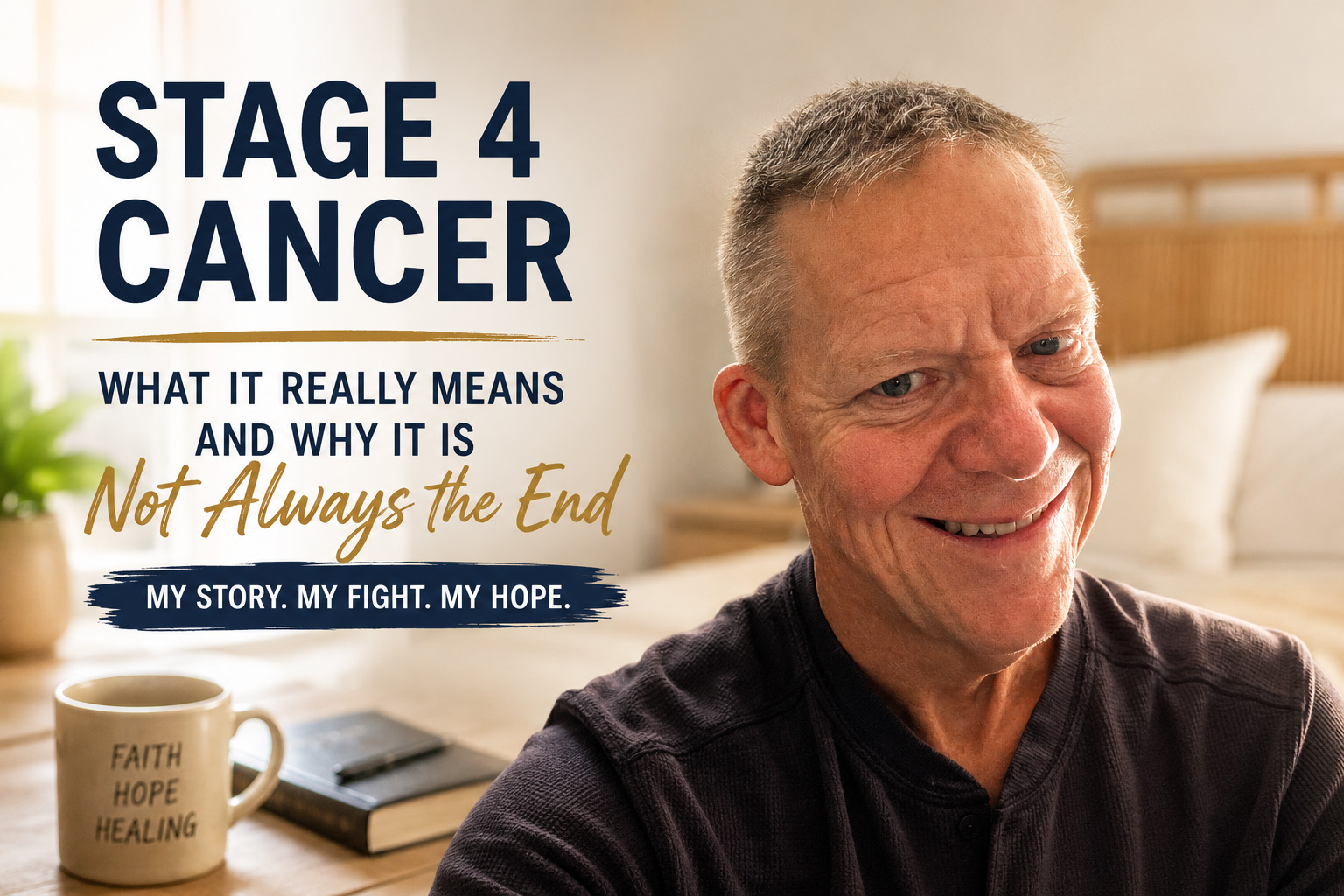
Stage 4 Cancer, What It Really Means
When most people hear the words “Stage 4 cancer,” they immediately think of one thing.
Death.
I know because I thought the same thing.
When I learned my cancer had spread to my lungs, I believed my life had changed forever. I remember reading the pathology report on my phone. I remember the fear. I remember wondering how much time I had left.
But what I have learned since then is that Stage 4 cancer is not one disease. It is not one outcome. And it is certainly not the end of every story.
I am living proof.
Today I continue to fight metastatic head and neck cancer. I continue treatment, monitor my scans, adjust my lifestyle, and share everything I learn so others can benefit from my experience.
If you or someone you love has recently been diagnosed with Stage 4 cancer, I hope this article helps answer your questions and offers something just as important.
Hope.
What Is Stage 4 Cancer?
Stage 4 cancer means the cancer has spread beyond its original location to another part of the body. Doctors often call this metastatic cancer.
For example:
- Breast cancer may spread to the bones.
- Colon cancer may spread to the liver.
- Melanoma may spread to the brain.
- Head and neck cancer may spread to the lungs.
Even after it spreads, the cancer keeps the name of where it started.
My cancer spread to my lungs, but it is still metastatic head and neck squamous cell carcinoma, not lung cancer.
That distinction is important because it determines which treatments are most effective.
Does Stage 4 Mean Terminal?
Not necessarily.
Years ago, Stage 4 cancer often meant there were very few treatment options.
Today, things are different.
Targeted therapies.
Immunotherapy.
Precision medicine.
Clinical trials.
Improved imaging.
Doctors now have more tools than ever before.
Many patients live for years with metastatic cancer while maintaining an active and meaningful life.
Every cancer is different.
Every patient is different.
No one can predict your individual outcome from the stage alone.
My Own Stage 4 Diagnosis
Several years after completing radiation, chemotherapy, and surgery for head and neck cancer, routine CT scans found multiple nodules in my lungs.
A biopsy confirmed the cancer had spread.
I was devastated.
My oncologist estimated that without treatment I might have only months to live.
Those words changed everything.
Instead of giving up, I decided to fight harder than I ever had before.
I continued working with my oncology team while also making major lifestyle changes that included improving my nutrition, exercising when I could, and learning everything I could about my disease.
Every decision became intentional.
Every day mattered.
Common Treatments for Stage 4 Cancer
Treatment depends on many factors, including the type of cancer, where it has spread, genetic markers, previous treatments, and your overall health.
Some of the most common treatments include surgery when appropriate, radiation therapy to control specific tumors, chemotherapy, immunotherapy, targeted therapy, hormone therapy for certain cancers, and participation in clinical trials.
Many patients receive several of these treatments over time.
My own treatment has included surgery, radiation, chemotherapy, immunotherapy, and careful monitoring with regular CT scans.
Every patient’s treatment plan is unique.
Living With Stage 4 Cancer
The physical treatments are only part of the story.
Living with Stage 4 cancer means living with uncertainty.
Every scan brings anxiety.
Every ache makes you wonder.
Every appointment becomes important.
There are days filled with hope.
There are days filled with fear.
Both can exist at the same time.
I have learned that life doesn’t stop after a Stage 4 diagnosis.
You still celebrate birthdays.
You still laugh.
You still make plans.
You still fall in love with ordinary moments.
Cancer changes your life.
It doesn’t erase it.
Scanxiety Is Real
One of the hardest parts of metastatic cancer isn’t treatment.
It’s waiting.
Waiting for CT scans.
Waiting for PET scans.
Waiting for blood work.
Waiting for phone calls.
Cancer patients even have a name for it.
Scanxiety.
The days before every scan can be emotionally exhausting.
I still experience it before every CT scan.
If you’ve felt that fear, you’re not alone.
I recently created a scanxiety checklist, to reduce CT scan anxiety and feel more prepared for your next CT scan.
Can Lifestyle Changes Help?
Lifestyle changes are not a replacement for medical treatment.
But many patients, myself included, choose to improve the things we can control.
For me, that has included focusing on a high protein diet, greatly reducing sugar and processed carbohydrates, exercising when possible, spending time outdoors, strengthening my faith, and working closely with my medical team.
These choices help me feel like an active participant in my care instead of a passive observer.
Always discuss any major dietary changes or supplements with your healthcare providers.
What I Want Every Newly Diagnosed Patient to Know
You will probably feel overwhelmed.
That is normal.
You will hear statistics.
Remember that statistics describe groups of people.
They do not predict your future.
Medicine changes.
Treatments improve.
People respond differently.
Never lose hope because of a number you read on the Internet.
Hope is not denial.
Hope is choosing to keep moving forward.
My Mission
When I was diagnosed with Stage 4 cancer, I started documenting everything.
My treatments.
My CT scans.
My lab results.
My setbacks.
My victories.
My faith.
My goal is simple.
If sharing my experience helps even one person feel less afraid or make a more informed decision, then this fight has a purpose beyond myself.
That is why I continue writing.
That is why I continue sharing.
Frequently Asked Questions About Stage 4 Cancer
A Stage 4 cancer diagnosis often raises more questions than answers. Patients and their families want to understand what metastatic cancer means, what treatments are available, what life may look like going forward, and whether there is still reason for hope. The following frequently asked questions address many of the concerns people have after receiving a Stage 4 cancer diagnosis. While every person’s situation is unique, these answers provide general information based on current medical understanding and my own experience living with Stage 4 metastatic cancer.
Stage 4 cancer means the cancer has spread from its original location to another part of the body. This process is called metastasis. Even after it spreads, the cancer is still named after where it started. For example, if head and neck cancer spreads to the lungs, it is still considered metastatic head and neck cancer, not lung cancer. Stage 4 is the most advanced stage of cancer, but advances in medicine have created many more treatment options than were available even a decade ago.
No. While Stage 4 cancer is a serious diagnosis, it is not always an immediate death sentence. Many patients are living significantly longer because of improvements in immunotherapy, targeted therapies, precision medicine, and clinical trials. Some people live for many years with metastatic cancer while maintaining an active and fulfilling life. Every person’s cancer is unique, and survival depends on factors such as the type of cancer, where it has spread, how it responds to treatment, and the patient’s overall health.
Some Stage 4 cancers can be cured, while others can be controlled for many years. Blood cancers, certain lymphomas, testicular cancer, and a small number of metastatic cancers may still be curable depending on the circumstances. For many solid tumors, the goal becomes controlling the disease, shrinking tumors, preventing progression, and maintaining the highest possible quality of life. Even when a cure is not possible, long-term remission and disease stability are increasingly common for some patients.
Metastatic cancer is another term for Stage 4 cancer. It means cancer cells have traveled through the bloodstream or lymphatic system and formed tumors in another part of the body. Although the cancer has spread, doctors continue treating it based on where it originally began. Understanding where the primary cancer started is one of the most important factors in choosing the right treatment.
Treatment depends on the type of cancer and each patient’s unique situation. Options may include surgery, radiation therapy, chemotherapy, immunotherapy, targeted therapy, hormone therapy, or participation in clinical trials. Many patients receive several different treatments over time as their disease changes. Your oncology team will develop a treatment plan based on the characteristics of your cancer and your overall health.
For many patients, immunotherapy has changed what is possible. These medications help the immune system recognize and attack cancer cells. Not every cancer responds to immunotherapy, but for those that do, the results can sometimes be dramatic and long lasting. Drugs such as Keytruda (pembrolizumab), Opdivo (nivolumab), and others have significantly improved outcomes for many patients with advanced cancers, including head and neck cancer, melanoma, lung cancer, and kidney cancer.
The frequency of imaging depends on your treatment plan and how stable your cancer is. Many Stage 4 cancer patients undergo CT scans every two to four months while receiving treatment. These scans allow doctors to determine whether tumors are shrinking, remaining stable, or growing. Waiting for scan results often causes significant emotional stress, commonly known as scanxiety.
Scanxiety is the anxiety many cancer patients experience before, during, and after imaging tests such as CT scans, PET scans, or MRIs. Waiting for results can be emotionally exhausting because every scan has the potential to change a treatment plan. Scanxiety is incredibly common and affects patients regardless of how well they have been doing. Recognizing these feelings and talking openly about them can help reduce some of the emotional burden.
There is no single diet proven to cure cancer. However, many patients choose to improve their nutrition to support their overall health during treatment. Some focus on increasing protein intake to maintain muscle mass, while others reduce processed foods and added sugars. Nutritional needs vary depending on the type of cancer, treatment side effects, and other medical conditions. Always discuss major dietary changes with your oncologist or a registered dietitian who specializes in oncology nutrition.
Some people continue working full time throughout treatment, while others reduce their hours or stop working entirely. The decision depends on the type of treatment, side effects, fatigue, physical limitations, and personal circumstances. Many patients find that continuing to work provides a sense of normalcy, while others need to focus entirely on their health. There is no right or wrong decision, only what works best for you and your family.
Receiving a Stage 4 diagnosis is overwhelming. Give yourself time to process the news, ask questions, and lean on the people who care about you. Build a medical team you trust, educate yourself using reliable sources, and consider joining a support group or connecting with other cancer survivors. Most importantly, remember that statistics describe populations, not individuals. Your story has not been written yet.
Prepare a list of questions before every appointment. Ask about the type of cancer you have, whether any genetic or biomarker testing is recommended, the goals of treatment, possible side effects, expected outcomes, and whether clinical trials are available. Understanding your treatment plan can help you feel more confident and involved in your care.
Yes. Some patients experience partial remission, complete remission, or long periods where their cancer remains stable with little or no growth. Advances in treatment have made long-term disease control possible for many cancers that were once considered rapidly fatal. While remission is not guaranteed, it is an important reminder that every person’s cancer responds differently to treatment.
Absolutely. Hope does not mean denying reality. Hope means believing there are still reasons to fight, new treatments to explore, meaningful moments to experience, and people who care about you. Medical advances continue every year, and many patients are living longer than anyone expected. No doctor, statistic, or survival chart can predict your individual future. Hope remains one of the most powerful tools you can carry throughout your cancer journey.