August 2021, I was diagnosed with head and neck cancer.
I did everything they asked.
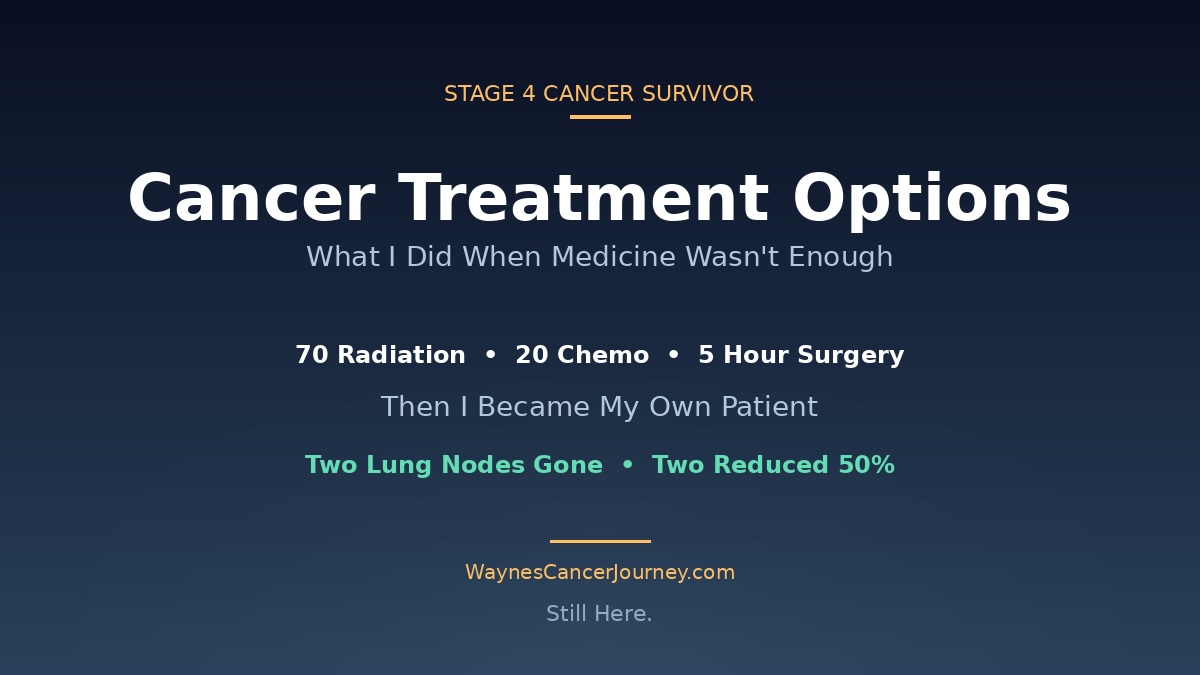
Seventy radiation treatments. Twenty rounds of chemotherapy. A five-hour radical neck dissection that carved away tissue and lymph nodes. I showed up. I sat in the chair. I trusted the process.
I also watched my wife try to hold our family together while pretending she wasn’t terrified. I saw the look in my adult sons’ eyes when they didn’t know what to say. I felt the weight of being the person everyone was worried about, the person who might not be there next year, the person who had become a countdown.
Cancer doesn’t just attack your body. It invades your home. It sits at your dinner table. It follows your family into their quiet moments and steals their sleep.
On June 3rd, 2025, the day of my 25th wedding anniversary, I was standing next to my wife when I opened my health portal on my phone. The pathology report was waiting. My cancer had gone metastatic. It had spread to my lungs.
Stage 4. Terminal.
I had maybe four good months before my body would begin shutting down. Four months before my organs started failing. Four months to say goodbye to the woman I’d just spent twenty-five years building a life with. Four months to figure out how to tell the people I love that I was out of options.
The process wasn’t enough. It was never going to be enough.
So I stopped waiting for permission and started asking a different question: What else is there?
My wife convinced me to travel to Tennessee to meet with a pharmacist and researcher who treats cancer as a whole-body war, not a tumor-by-tumor skirmish. I researched every supplement, every repurposed medication, every alternative therapy I could find. I optimized my vitamin D from severely deficient to optimal. I fixed my magnesium and zinc. I added high-dose IV vitamin C. I adopted a carnivore diet and watched my body transform. I became my own patient, tracking labs, documenting decisions, measuring everything.
For the first time in years, I felt like I was fighting back instead of just surviving.
Six months later, two lung nodes were undetectable. Two others had shrunk by 50 percent.
I should be dead by now. I’m not.
I’m not a doctor. I can’t tell you what to do. But I can show you what I found. This page explains each treatment in my protocol, from Keytruda and high-dose IV vitamin C to vitamin D optimization and ivermectin. What they are. Why I use them. What the research says.
If you want the full story, the emotional journey, the detailed decisions, and the moments that shaped them, I share that in my 400-page manuscript. You can read Chapter 1 here.
If you’re walking this road, or loving someone who is, don’t wait for permission. Start asking better questions. The options no one told you about might be the ones that save your life.
And if you’re the one standing beside someone fighting this battle, know that your exhaustion is real, your fear is valid, and your presence matters more than you’ll ever know.
Keytruda
Keytruda is a type of cancer treatment known as immunotherapy. Unlike chemotherapy, which attacks both healthy and cancerous cells, Keytruda helps your own immune system find and destroy cancer cells. The generic name for Keytruda is pembrolizumab, and it is given through an IV, usually once every few weeks. It is often used to treat cancers like melanoma (a serious form of skin cancer), lung cancer, bladder cancer, and several others. It works best in cancers that have certain genetic features or high levels of something called PD-L1.
High Dose IV Vitamin C (HDIVC)
What is High Dose IV Vitamin C?
High Dose IV Vitamin C therapy, often referred to as HDIVC, is an alternative or complementary cancer treatment that delivers vitamin C directly into the bloodstream in concentrations far greater than those achieved through oral supplementation.
Vitamin D
Vitamin D isn’t actually a vitamin in the traditional sense. It’s a prohormone, a substance your body converts into a hormone. This distinction matters because hormones are chemical messengers that regulate critical functions throughout your body. Vitamin D influences over 200 genes and plays a role in nearly every system, including your immune system, your bones, your muscles, and yes, your body’s ability to fight cancer.
Magnesium
Why Magnesium Matters More Than You Think
Magnesium is involved in over 300 enzymatic reactions in your body. It plays critical roles in energy production, DNA synthesis, protein formation, muscle and nerve function, blood sugar control, and blood pressure regulation. Despite its importance, studies suggest that up to 50% of Americans don’t get enough magnesium from their diet.
Zinc
Zinc is an essential trace element, meaning the body needs it in small amounts to function, but it cannot produce or store it. That means regular intake through food or supplements is necessary. Zinc plays a crucial role in over 300 enzyme functions and is essential for DNA synthesis, cell division, immune health, wound healing, and even the senses of taste and smell. It is found in foods like red meat, poultry, shellfish, legumes, seeds, and eggs. Even with a decent diet, deficiencies are common, especially in people with chronic illness, digestive disorders, or cancer.
Ivermectin
Ivermectin was first introduced as an antiparasitic medication that transformed global health, especially in the treatment of river blindness and other tropical diseases. However, in recent years, this humble drug has sparked new interest, not just for its potential antiviral properties, but also for its role in combating cancer. Ivermectin has quietly gained traction in the world of emerging cancer treatments, especially among those exploring unconventional paths in the battle against chronic illness.
Fenbendazole
Fenbendazole is a veterinary antiparasitic medication—commonly used to deworm dogs and livestock. It works by blocking a protein called tubulin, preventing parasites from absorbing nutrients. Scientists later discovered that this same mechanism could affect how cancer cells divide and survive. Early studies suggest that Fenbendazole may interrupt this process. By binding to microtubules (the cell’s internal scaffolding), Fenbendazole can disrupt how nutrients and energy are transported inside cancer cells. When this transport system fails, glucose metabolism slows down, depriving the cancer of its primary energy source.
Morning Sunshine
I wanted to share something simple but powerful that’s now part of my daily cancer treatment routine—morning sunlight. I’ve been battling stage four cancer, and while I’m doing everything I can medically, including infusions, supplements, and a moderate carnivore diet. I also believe in supporting my body in every natural way possible. Morning sunlight has become one of those tools.
Methylene Blue
Methylene Blue is a man-made chemical that’s been around since the 1800s. Doctors originally used it to treat conditions such as malaria and blood disorders, and it has also been used in surgeries to help identify specific tissues. Scientists are now discovering that Methylene Blue has unique properties in the process of cellular energy production and fighting cancer.
Carnivore Diet
The carnivore diet is a way of eating that focuses entirely on animal-based foods, primarily meat, fish, eggs, and sometimes dairy. It eliminates all plant-based foods, including grains, vegetables, fruits, legumes, and seed oils.
Carnivore Diet for Beginners: My Experience, Tips, and What You Need to Know
See what happened after I started the carnivore diet while fighting stage 4 metastatic cancer.
The carnivore diet is a way of eating that focuses entirely on animal-based foods. For centuries, traditional cultures relied on meat and fat to thrive, and today thousands are rediscovering its benefits. On TikTok alone, the hashtag #CarnivoreDiet has been used over 91 million times. This nutrient-dense and anti-inflammatory approach strips away sugars and carbs, often delivering clarity, stable energy, and relief from chronic symptoms.
Botox for Dystonia
Botox, or botulinum (BOT-you-LYE-num) toxin, is a purified protein made from the bacterium Clostridium botulinum (klaus-TRID-ee-um BOT-you-LYE-num).
It works by temporarily blocking the release of acetylcholine (ah-SET-il-KO-leen), the chemical messenger that tells muscles to contract.
When injected into overactive muscles, it reduces spasms and stiffness, giving relief from pain and abnormal pulling.
Botox does not cure the underlying cause, such as radiation scarring or nerve damage.
Alpha-Lipoic Acid (ALA)
Alpha-lipoic acid for neuropathy
Alpha Lipoic Acid, often called ALA, is a natural compound made by the body that helps cells turn food into energy. It also acts as an antioxidant, which means it helps protect cells from damage caused by harmful molecules called free radicals. Unlike some antioxidants, ALA works in both water and fat inside the body, allowing it to help protect many different types of cells. ALA is found in small amounts in foods like spinach, broccoli, and red meat, and it is also available as a dietary supplement. It has been studied for its potential benefits in supporting nerve health, blood sugar control, and overall cellular health.