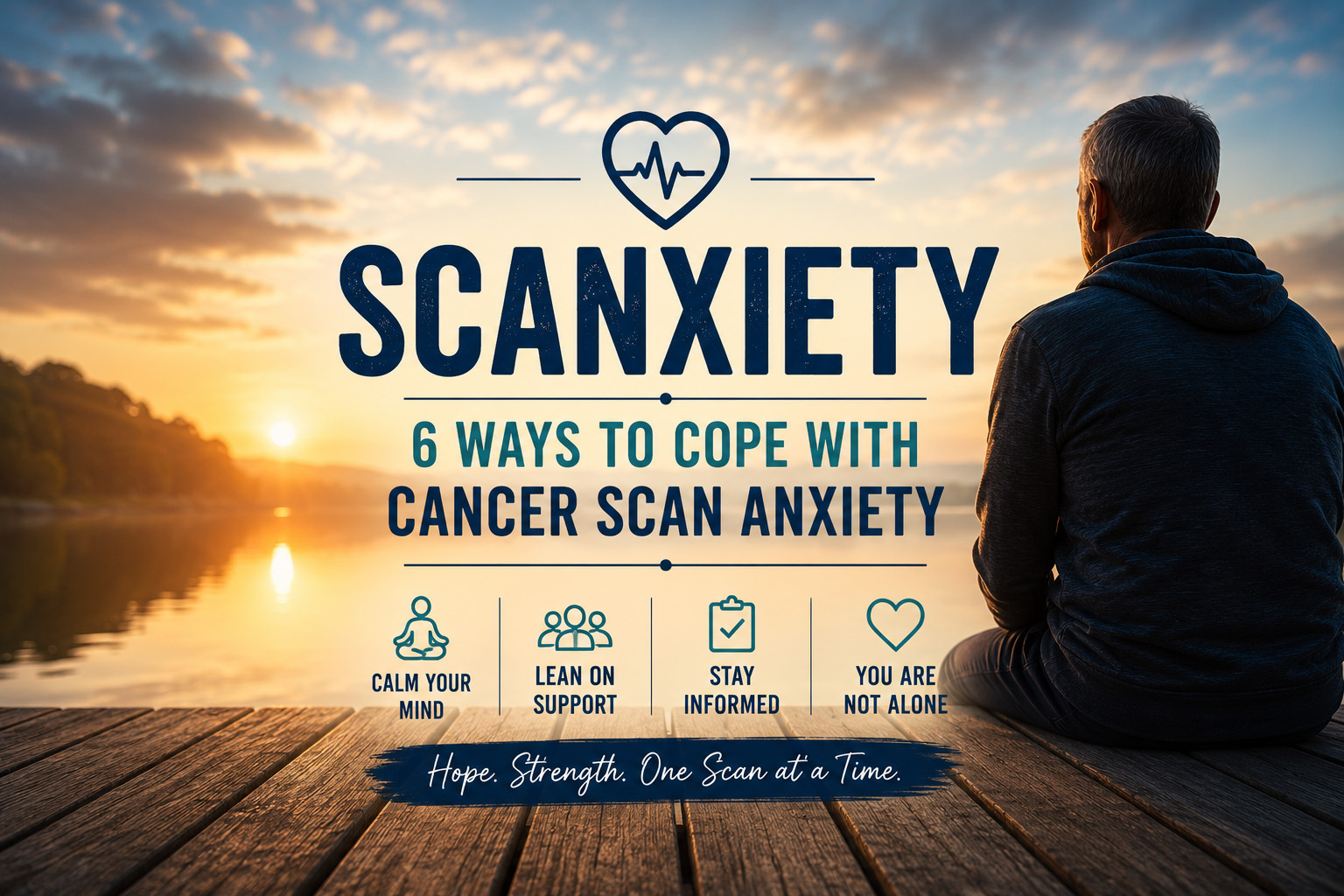

6 Ways to Cope With Scanxiety
Waiting for a CT scan, PET scan, MRI, or biopsy results can feel emotionally exhausting. If you’re experiencing scanxiety, you’re not alone. If you’re unfamiliar with the term or want to understand why cancer scans can cause so much anxiety, read my guide, What Is Scanxiety? Meaning, Symptoms & Cancer Scan Anxiety.
While it’s impossible to eliminate uncertainty completely, practical strategies can help reduce stress, improve your emotional well-being, and make the waiting period more manageable.
1. Know What to Expect Before Your Scan
One of the biggest causes of scanxiety is uncertainty. Before your appointment, ask your doctor or care team what the scan is looking for, how long it will take, when you should expect results, and how those results will be communicated. Having a clear timeline can reduce unnecessary worry and help you feel more in control.
2. Use Relaxation Techniques to Calm Your Mind
Simple relaxation exercises can help lower anxiety before, during, and after your scan. Deep breathing, prayer, meditation, mindfulness, listening to calming music, or progressive muscle relaxation are all effective ways to quiet racing thoughts. Practice these techniques before your appointment so they feel natural when you need them most.
3. Don’t Face It Alone
Bring a spouse, family member, or trusted friend with you if possible. A familiar face can provide comfort, help keep you distracted before the scan, ask questions you may forget, and offer emotional support while you wait for results. Sometimes just knowing someone is walking beside you makes the burden feel lighter.
4. Resist the Urge to Constantly Check for Results
Many hospitals now post test results to online patient portals before your physician has had an opportunity to explain them. Reading medical terminology without context can easily increase fear and lead to unnecessary panic. If waiting is especially difficult for you, consider letting your doctor discuss the results first before opening the report yourself.
5. Ask for Professional Help When Anxiety Becomes Overwhelming
If scanxiety begins affecting your sleep, appetite, daily activities, or quality of life, tell your oncology team. They can recommend counseling, cancer support services, stress-management programs, or medications when appropriate. Seeking help is a sign of strength, not weakness.
6. Connect With Others Who Understand
One of the best ways to cope with scanxiety is to talk with people who have experienced it themselves. Whether through a local cancer support group, an online community, or conversations with fellow survivors, sharing your fears with others who truly understand can provide reassurance, encouragement, and hope during one of the most difficult parts of the cancer journey.
Remember, Scanxiety Is Normal
Nearly every cancer patient experiences some level of anxiety before a scan or while waiting for results. Feeling nervous doesn’t mean you’re weak; it means you care deeply about your future. I’ve experienced scanxiety many times throughout my own Stage 4 cancer journey, and I’ve learned that while we cannot control the results, we can control how we prepare, who we lean on, and how we choose to spend the waiting days. One scan never tells your entire story, and no matter what the results show, you won’t have to face them alone. If you want to understand more about what causes scanxiety and why it happens, I explain it in detail here.
Free CT Scan Week Scanxiety Guide
Don’t face your next CT scan unprepared. Download my Free CT Scan Week Scanxiety Guide and discover the step by step routine I use to reduce scanxiety, prepare for my oncology appointments, understand my results, and approach every CT scan with greater confidence and peace of mind.