There is a moment in every cancer patient’s life when the standard answers stop being enough.
Mine came in the spring of 2025, when I sat across from my oncologist and heard words that should have crushed me. The bilateral lung nodules that had appeared in February had doubled in size by May. Progressive metastatic disease. Stage four squamous cell carcinoma spreading through my lungs, the cancer I had already beaten twice, refusing to stay defeated.
I had been through carboplatin and 5-FU in 2021. I had been through it again in 2024. My feet were already partially numb from neuropathy. My voice was damaged from 70 radiation treatments. My left shoulder had been reconstructed through a five-hour, three-surgeon radical neck dissection. I had already given this disease everything I had, and it came back anyway.
So, when my oncologist presented my options, I made a decision that surprised even me. I chose Keytruda alone, no chemotherapy, because more platinum-based chemotherapy would likely have destroyed my hands completely. And then I did something that most cancer patients never do. I drove to Tennessee with my wife and my son to consult with a doctor and pharmacist who specialized in integrative oncology protocols. I walked out of that pharmacy with a plan that included, among other things, starting the carnivore diet that same day.
This is what I learned over the six months that followed.
Why I Even Considered the Carnivore Diet
I was not someone who read wellness blogs or followed diet trends. I was a project manager with over twenty years of experience in Fortune 500 companies. I believed in data, evidence, and clinical outcomes. So when thinking about the carnivore diet and stage 4 cancer, the idea of eating nothing but meat and fat to fight cancer sounded, honestly, like something you read on a fringe internet forum.
But then the pharmacist explained something that stopped me cold.
Cancer cells consume glucose at ten to fifty times the rate of normal cells. That is not a fringe claim. That is established metabolic biology, first described by Otto Warburg in the 1920s and confirmed repeatedly in modern research. Cancer has a metabolic addiction to sugar. It fuels itself through glycolysis, a process that requires a constant supply of glucose. This is actually how PET scans work, radioactive glucose is injected into the body, concentrating where cancer is most active because the tumors are drinking it in.
The average American consumes 77 grams of sugar per day, more than double the 36 grams the American Heart Association recommends for men. Ultra-processed foods now make up 60 percent of the American diet. Between 1970 and 2000, average sugar consumption in America climbed steadily, and we normalized it entirely. We are, as a culture, feeding ourselves a substrate that cancer thrives on.
The theoretical logic of metabolic therapy is not to cure cancer through diet. It is to starve the tumor while simultaneously reducing the systemic inflammation that allows cancer to grow and spread. Healthy cells can generate energy by oxidizing fat. Most cancer cells cannot make that switch efficiently. Cut the glucose supply, reduce insulin spikes, lower inflammation, and you shift the biological terrain in your favor.
I was doing Keytruda with a 20 percent PD-L1 score, which meant immunotherapy had a lower probability of working for me without chemotherapy support. I needed every advantage I could stack. The carnivore diet was one more lever I could pull, one that cost nothing except comfort and convenience.
I decided comfort and convenience were not worth my life.
Exactly What I Ate
People always want the practical details, and I get it. I would have wanted them too.
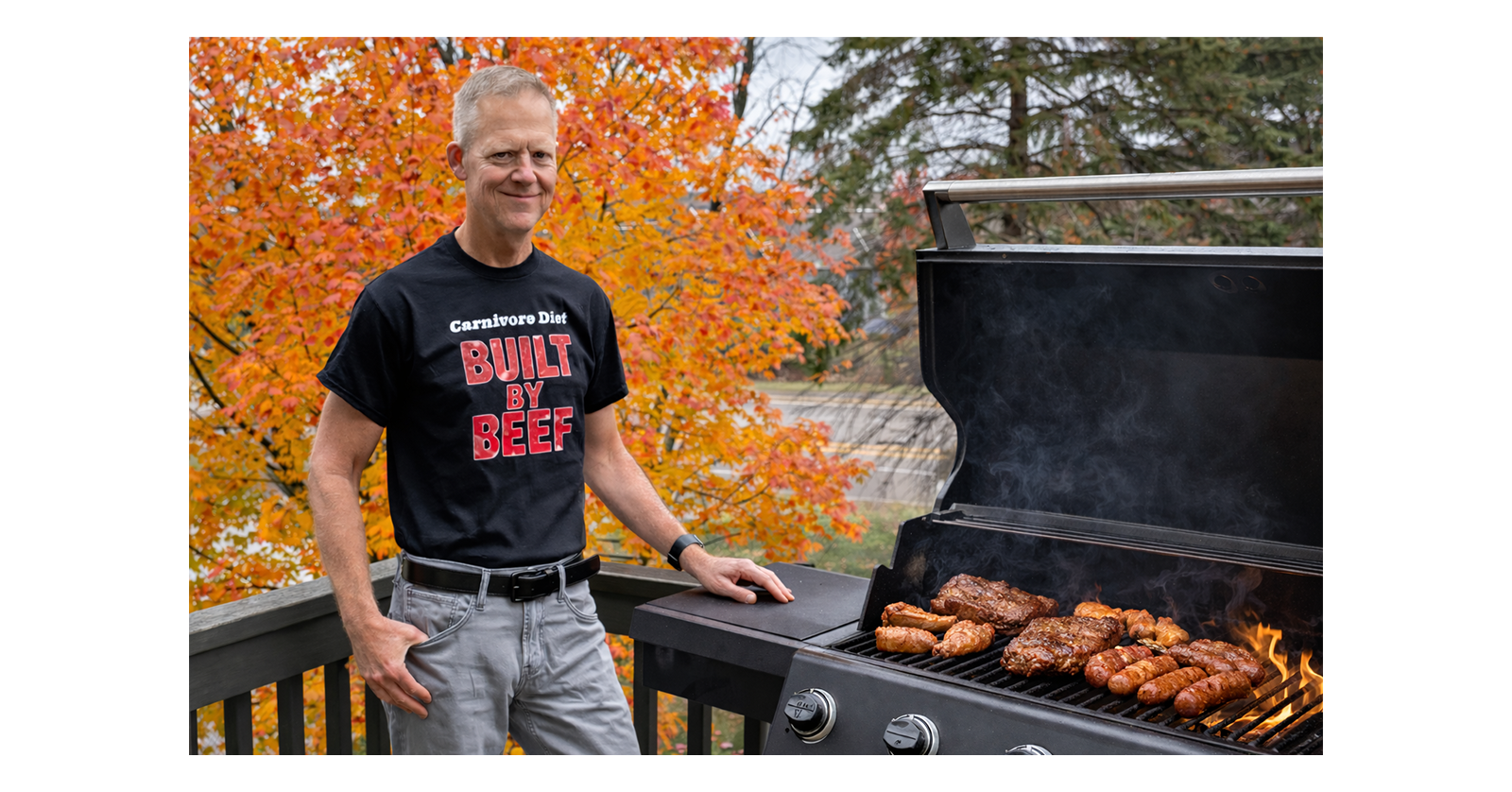
Starting June 9, 2025, my diet became meat, fat, salt, and water. That is it. No vegetables, no fruit, no bread, no pasta, no rice, no legumes, no dairy beyond butter and some eggs. The logic was simple. Remove every source of carbohydrate. Force the body into a fat burning metabolic state called ketosis, where the liver converts fat into ketones that the body and brain use for energy instead of glucose. Eliminate anything that causes insulin spikes or feeds the glycolytic pathway on which cancer depends.
My typical day looked like this. Morning was bacon with eggs, cooked in the bacon grease. Sometimes, a ribeye steak or ground beef would replace the bacon. Salt was liberal because electrolytes matter when you eliminate carbohydrates. Lunch was often more beef, sometimes tuna, sometimes chicken. Dinner repeated the same pattern. Beef, chicken, or fish with butter, eggs, salt, water, and nothing else.
My wife started the protocol alongside me, which made an enormous difference. She had already been on an Atkins phase one diet, so the transition was less jarring for her than for me. Having a partner doing the same thing eliminated the temptation of watching someone else eat bread across the table. We cooked together. We ate together. We committed together.
I want to be honest about the early weeks. The first seven to ten days were genuinely hard. Headaches. Fatigue. Cravings for everything I had ever loved eating. The night before I started, I had eaten enchiladas. That morning I had oatmeal and fruit. And then the pharmacist said start today and I did. Cold stop.
But somewhere in the second week, something shifted.
What Happened to My Body
Before I started the carnivore diet in June 2025, my blood sugar was running in the pre-diabetic range of 140 to 170 mg/dL. I was 205 pounds. I had chronic brain fog from treatment, inflammation, and a body that had been through too many rounds of chemotherapy.
Six months later, my blood sugar measured 100 mg/dL, down from the pre-diabetic range to optimal. I weighed 155 pounds, fifty pounds lighter than when I started. I had physical therapy twice a week and went to the gym on the other days. My goal was to maintain my strength while losing fat. My body composition improved dramatically.
My full lab panel at the six-month mark told a story that surprised even my oncologist. Liver function was completely normal, AST 25 and ALT 26, despite the high protein intake and the other supplements I was taking. My kidney function was excellent, with a GFR above 60 and creatinine at 0.93. Bone marrow looked healthy, with a white blood cell count of 5.0, hemoglobin of 13.3, and platelets of 213. Calcium was maintained at 9.1 mg/dL, with no hypercalcemia despite the aggressive vitamin D dosing I was administering simultaneously.
No organ damage. No toxicity. No warning flags.
What I did not expect was the cognitive shift. Within a few weeks of being on a strict carnivore diet, the brain fog started to lift. I was thinking more clearly than I had in years. Energy stabilized. I stopped experiencing the afternoon crashes that had become normal for me. I woke up ready to move, rather than needing an hour to feel functional.
The inflammation dropped. I could feel it, which sounds vague but becomes obvious when chronic inflammation is part of your daily baseline. The joint soreness that I had attributed to aging and treatment residue reduced noticeably. My body felt like it was running cleaner.
I am not a small man, and I have always lifted weights. Being 155 pounds lean and strong feels different than being 205 pounds and inflamed. My body feels ten years younger. That is not marketing language. That is my honest experience after six months of a strict carnivore diet, combined with everything else I was doing.
How the Carnivore Diet Fits Into the Larger Protocol
The carnivore diet did not operate in isolation. I want to be clear about that because isolation is exactly where these conversations go wrong. I was not doing carnivore instead of medicine. I was doing a carnivore diet alongside Keytruda and an integrative protocol that my oncologist was aware of and monitoring through regular bloodwork.
Every three weeks, I received a Keytruda infusion, pembrolizumab, the immunotherapy that was giving my immune system a chance to recognize and attack the cancer. Twice a week for the first twelve weeks, I drove to The DRIPBaR in Edina, Minnesota for 75-gram high dose IV vitamin C infusions. Research suggests high-dose intravenous vitamin C may create oxidative stress in cancer cells while supporting immune function and quality of life during treatment.
I was taking vitamin D at 50,000 IU twice a week plus 10,000 IU daily. My vitamin D level had been at 18 ng/mL when I was first evaluated, severely deficient, and I brought it up to 72 ng/mL. Vitamin D plays a critical role in immune regulation and has been associated with cancer outcomes. 90% of all cancer patients are vitamin D deficient or vitamin D insufficient. I was also taking zinc at 50mg daily and magnesium, both of which support immune function and are chronically deficient in patients eating processed food diets. Zinc and magnesium absorption also improve when you remove the phytates found in grains and legumes, which is another reason the carnivore approach made sense for my specific situation.
Three days a week, I took fenbendazole at 500mg, a repurposed antiparasitic that has attracted research attention for its potential to disrupt cancer cell division. For a period of time I increased the fenbendazole level to 1000mg three times a week. I monitored my liver enzymes continuously throughout because anything you add to an already stressed body needs careful monitoring.
The diet was the foundation. It set the metabolic stage so that everything else could work more effectively. When you reduce systemic inflammation through diet, eliminate glucose spikes that feed tumor metabolism, and provide your body with bioavailable protein and fat instead of processed carbohydrates, you change the internal environment that cancer is trying to grow in. Keytruda had a better work environment. The IV vitamin C had a body that was not fighting chronic diet-induced inflammation, at the same time, it was fighting cancer.
This is the part that most integrative conversations miss. It is not a diet or medicine. It is diet and medicine, thoughtfully combined and carefully monitored.
What Surprised Me Most
I expected weight loss. I expected some change in energy. I did not expect the speed and completeness of the transformation.
Three months after starting the protocol, my first CT scan showed the lung nodules were shrinking. The right middle lobe nodule had dropped from 8 millimeters to 7 millimeters. That may sound small, but it represented the first time since February that the cancer had stopped growing. My wife and I cried when we read it.
By December 2, 2025, six months after I started the carnivore diet and the full protocol, I was reading my CT results on my phone from the patient portal. Two of the four lung nodules were now nondetectable. Gone. The other two had shrunk dramatically. The right middle lobe nodule was at 4 millimeters, back to its original February size. The right upper lobe was at just 2 millimeters, barely visible. The report read: no other measurable nodules, no evidence for new metastatic disease in the chest, abdomen, or pelvis.
I read it twice. Then I looked up at my wife sitting across the room, watching my face.
“Two of them are gone,” I said.
I will never know with absolute certainty which part of the protocol was responsible for what. I cannot isolate the carnivore diet from the Keytruda from the IV vitamin C from the vitamin D from everything else I was doing. That is the honest limitation of an N-of-one patient experience. But I know what was different this time compared to my first two rounds. I know what I added. And I know what the scans showed.
The Criticism Is Real, and So Is My Skepticism
I want to address the pushback directly because I am not here to sell you a diet. I am here to tell you what I did and what happened.
The carnivore diet has serious critics in the medical and nutritional science community, and their concerns are worth understanding. Long-term studies on very high red meat consumption and cardiovascular outcomes are mixed, and some suggest elevated risk for certain populations. Eliminating all plant foods removes fiber, which plays a documented role in gut microbiome health. Certain micronutrients found primarily in plants, including vitamin C in its dietary form, require deliberate supplementation on a carnivore protocol. These are legitimate considerations that anyone considering this approach should discuss with their physician.
My oncologist was honest with me. He said there was research on ketogenic and low-carb approaches in cancer, but that the evidence was still developing. He monitored my bloodwork throughout this process. I had labs drawn regularly, tracking every organ system that might be affected by what I was doing. The results were consistently good, but that does not mean every person in every situation would see the same results.
What I would push back on is the reflexive dismissal of metabolic approaches based on the idea that conventional nutrition guidelines are settled science. They are not. The dietary guidelines that told Americans to eat low-fat, high-carbohydrate diets for decades contributed to obesity and metabolic disease at a population scale. The same institutions that promoted those guidelines also missed the connection between chronic inflammation, sugar, and cancer progression for a very long time. I am not anti-medicine. I am pro-questioning.
What I Would Tell Another Cancer Patient
I want to be precise here because this is important. I am not a doctor. Nothing I share on this blog or in my memoir constitutes medical advice. What I am sharing is my personal experience, documented through six months of comprehensive lab monitoring, under the care of a board-certified oncologist who knew everything I was doing.
With that said, here is what I would tell you if you sat across from me.
Food is chemistry. What you put in your body every single day changes the biochemical environment in which your cancer either thrives or struggles. The idea that diet is irrelevant to cancer outcomes is not supported by the research or my experience.
You are not powerless. I was told Keytruda had a 20 percent match. The statistics were not in my favor. I had every negative prognostic marker you can have. Positive surgical margins, extranodal extension, poorly differentiated cells, progressive metastatic disease, and low PD-L1 expression. And two tumors disappeared. That does not mean the protocol I used will work the same way for you. But it means the terrain matters, and you can influence it.
Get your vitamin D checked. One simple vitamin D level test could save your life. Get your zinc and magnesium checked. Find out whether the food you eat every day is promoting inflammation. Ask your oncologist about integrative approaches, not instead of treatment but alongside it.
And find your people. My wife refused to accept that there was nothing more we could do. She researched, she drove, she sat in consultations, and took notes when I was too exhausted to process information. My son drove through storms to get me to the consultation that changed everything. That support system kept me alive as surely as any treatment I received.
The Bigger Picture: Your Immune System Is the Weapon
Here is the thing I keep coming back to when I think about why the carnivore diet matters in the context of cancer treatment.
The immune system is the weapon. Keytruda works by removing the brake that cancer puts on immune cells, allowing the body’s T cells to recognize and attack the tumor. But if your immune system is exhausted from chronic inflammation, depleted of critical micronutrients, and running on a fuel source that is also feeding the cancer, you are handicapping the weapon before the fight starts.
Everything I did for six months was designed to optimize the immune system’s ability to do its job. The carnivore diet removed inflammatory foods and eliminated glucose spikes. The vitamin D brought a severely deficient system up to functional levels. The zinc and magnesium supported enzymatic processes that immune cells depend on. The IV vitamin C directly induced oxidative stress in the tumor microenvironment. The daily exercise and sunlight supported the immune rhythm and overall metabolic health.
I was not hoping Keytruda would work despite my lifestyle. I was building the most capable immune system I could so that Keytruda had something to work with.
I am not cured. Cancer is still part of my life. I still get scans. I still see my oncologist. I still take this one day at a time, because that is the only honest way to live with stage four metastatic disease. But I am here, writing this, fifty pounds lighter, with a body running better than it has in years, watching the numbers on my scans move in a direction that my doctors said was unlikely.
Two tumors are gone.
I started the carnivore diet on June 9, 2025, and I have not looked back.
If you are fighting, I hope something in this helps you fight smarter.
Wayne Schlicht is a PMP-certified Senior Infrastructure Project Manager, cancer survivor, and the author of “Still Here: How Faith, Food, and Family Beat Stage Four Cancer.” He documents his ongoing treatment journey at WaynesCancerJourney.com.
This article is for informational purposes only and does not constitute medical advice. Always consult with your oncologist and healthcare team before making any changes to your diet or treatment protocol.