The most important question in cancer care is also the most frustrating: how do you find it before symptoms appear?
For most people, the answer has been to wait. Wait for a lump. Wait for pain. Wait for a doctor to notice something on a scan ordered for something else entirely. By then, many cancers have already progressed to a point where treatment options narrow quickly.
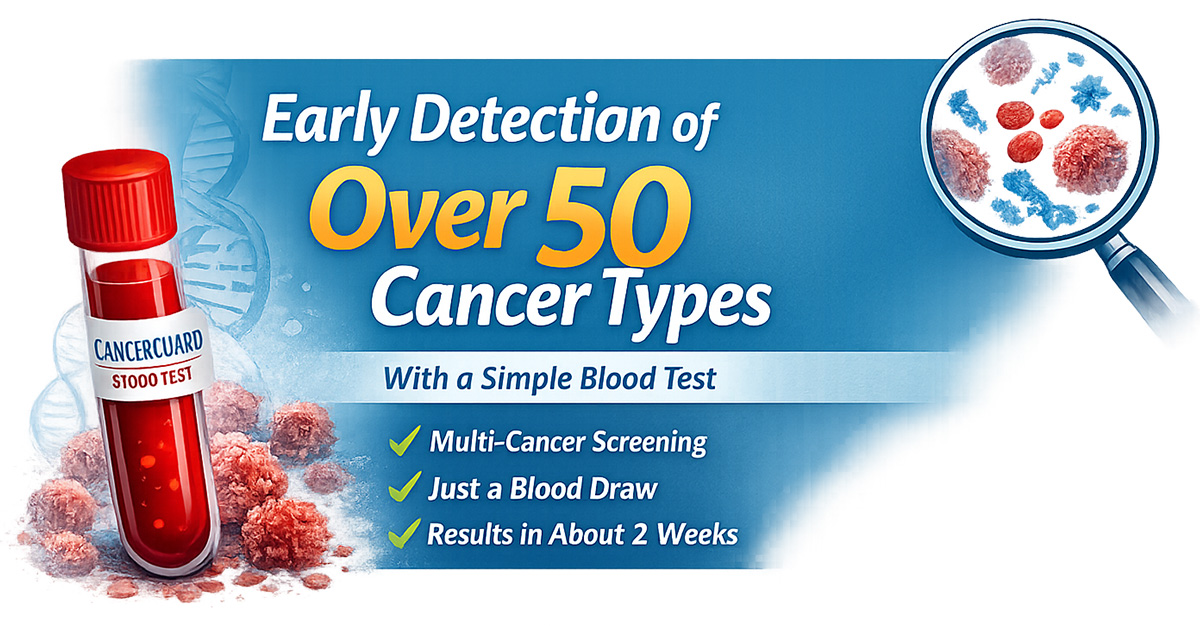
The Cancerguard blood test is designed to change that. It screens for biological signals linked to more than 50 different types of cancer — including many that currently have no routine screening options — using a single blood draw. For anyone focused on cancer risk, prevention, or long term health, this kind of test represents a meaningful shift toward earlier awareness.
What Is the CancerGuard Blood Test?
Cancerguard is what oncologists call a multi-cancer early detection test, or MCED. Rather than targeting a single cancer the way a mammogram or colonoscopy does, it evaluates your blood for signals associated with a wide range of cancers at once.
That breadth matters. Pancreatic cancer, liver cancer, and several other aggressive cancers are usually found only after they have spread, in part because there is no standard screening test for them. A test that can pick up signals across more than 50 cancer types introduces a layer of visibility that simply did not exist before.
How It Works
When cancer develops, it leaves molecular traces in the blood. Cancerguard analyzes two of them: circulating tumor DNA and cancer-associated proteins. These traces are often present before symptoms begin.
By considering these signals together, the test improves the likelihood of detecting cancer early, when more treatment options are still available. This reflects a broader shift in oncology toward catching cancer before it announces itself.
Why Timing Changes Everything
Most cancers are not found through routine screening. They are discovered after symptoms appear, which often means the disease has already advanced. Earlier detection tends to mean more options, less invasive treatment, and in many cases, better outcomes.
If you want to understand how timing affects those options, this breakdown walks through the full range of treatment paths available depending on where cancer is caught:
What Are Cancer Treatment Options?
What the Testing Process Looks Like
The process is simple. A provider orders the test, a blood sample is collected, and results are typically available within about two weeks. Results are reviewed with a healthcare professional.
A negative result means no cancer signal was detected. That is worth something on its own — clarity and peace of mind. A positive result means signals were found, and follow-up diagnostic testing is recommended.
One important distinction: this is a screening tool, not a diagnosis. It identifies risk signals early. If something is flagged, imaging or biopsy would come next.
Who Should Consider This Test
Cancerguard is generally recommended for adults over age 50 or those with elevated risk factors, including family history, lifestyle risks, or a previous cancer experience.
It does not replace standard screenings like colonoscopies or mammograms. It complements them by expanding the range of cancers you are watching for.
For those focused on prevention and daily habits that support resilience, this piece is worth reading alongside:
Fighting Cancer With Morning Sunshine
What the Test Cannot Do
No screening test is perfect, and Cancerguard is no exception.
It does not detect every cancer. False positives and false negatives can occur. It cannot determine the exact type or stage of cancer without additional testing. And sensitivity varies by cancer type and the stage of disease at the time of testing.
That said, the question becomes less about perfection and more about increasing the odds of catching something early. Even partial visibility beats none.
A Personal Perspective
When you have lived through cancer, your perspective changes.
I followed the traditional path. Treatments, surgeries, everything my doctors recommended. Yet the cancer still progressed. By the time it was labeled metastatic, the conversation had shifted from treatment to time.
Then something shifted. I started asking different questions. Exploring what else was possible. That experience reshapes how you think about tools like this one.
It is not about replacing treatment. It is about gaining information earlier, when more options are still on the table.
If you want to understand more about the path I took and what changed along the way:
High Dose IV Vitamin C and Stage 4 Cancer
Is It Worth the Cost?
Cancerguard is not yet widely covered by insurance, so most people pay out of pocket. The Cancerguard blood test currently costs about $689. The exact cost varies by provider, so it is worth asking before ordering.
When viewed through the lens of what you are buying — broader cancer awareness across more than 50 cancer types, with a simple blood draw — many people see it as an investment in early knowledge rather than a medical expense. Ultimately, the value depends on your risk tolerance, your health priorities, and how much early information matters to you.
Frequently Asked Questions
What does the Cancerguard blood test detect?
It detects biological signals associated with over 50 different cancer types by analyzing circulating tumor DNA and cancer-related proteins in the blood.
Is Cancerguard a diagnostic test?
No. It is a screening test. A positive result means signals may be present. Additional diagnostic testing is required to confirm whether cancer is actually present.
How accurate is it?
Accuracy varies depending on cancer type and stage. Tests like this are generally more effective when cancer signals are present in higher concentrations, which often corresponds to more advanced disease. That is why combining it with standard screenings is recommended.
Who should take it?
Adults over 50, or those with elevated cancer risk due to family history, lifestyle, or prior cancer experience.
Does it replace routine screenings like mammograms or colonoscopies?
No. It is designed to complement them, not replace them.
How long do results take?
About two weeks after the blood sample is collected.
Can it detect early-stage cancer?
In some cases, yes. That is the goal. But not all cancers will be detected at the earliest stage, and sensitivity improves as cancer progresses.
Screening for over 50 cancer types with a single blood test would have sounded unrealistic not long ago.
Now it is here.
It is not perfect. But it represents something important — a shift toward finding cancer earlier, when more options still exist, and the odds are still in your favor.
If you are thinking about prevention, early detection, or simply staying one step ahead, this is a conversation worth having with your doctor.