Cancer has a way of narrowing the world. When a person receives a diagnosis, the questions begin immediately. What are the treatment options? What works. What does the science say? What can be done alongside standard treatment? Many patients quickly discover that the landscape of cancer care includes both conventional therapies and supportive or integrative approaches that aim to strengthen the body during treatment.
One therapy that continues to attract attention is high dose intravenous vitamin C. Many patients have never heard of it until they begin searching for additional options. Others hear about it from fellow patients in treatment centers, online support groups, or integrative medicine clinics. The topic raises many questions. What exactly is high dose IV vitamin C? How does it work? Is it different from simply taking vitamin C supplements? What does the scientific research say? And why are some oncology programs beginning to study it more seriously?
This article explores those questions. It explains high dose IV vitamin C and stage 4 cancer. It also explains how high dose IV vitamin C works in the body, how it differs from oral supplementation, what the scientific literature says so far, and why some cancer patients are incorporating it into their treatment plans under medical supervision. This is not medical advice. Every patient must work with their own physicians and medical team. The goal here is simply to explain the science, the research, and one patient experience.
Understanding Vitamin C in the Body
Vitamin C, also known as ascorbic acid, is one of the most widely studied vitamins in human health. It plays essential roles in immune function, collagen formation, wound healing, and antioxidant protection. Humans cannot produce vitamin C naturally, so it must be obtained through diet or supplementation.
Under normal dietary conditions, vitamin C works primarily as an antioxidant. Antioxidants help neutralize free radicals and reduce oxidative stress within cells. Oxidative stress has been linked to aging, inflammation, and many chronic diseases, including cancer.
In healthy individuals, vitamin C levels in the blood are tightly controlled. When taken orally, through food or supplements, the digestive system carefully regulates absorption. Once blood levels reach a certain point, the body reduces absorption and increases excretion through the kidneys. Because of this regulatory mechanism, oral vitamin C can only modestly raise blood levels.
This limitation becomes important when discussing high dose IV vitamin C therapy.
Oral Vitamin C Versus Intravenous Vitamin C
When vitamin C is taken orally, only a portion of the dose is absorbed by the digestive tract. Large oral doses often lead to gastrointestinal discomfort, and most of the excess vitamin C is excreted in urine.
Researchers have shown that oral vitamin C typically produces blood concentrations of about 0.1 to 0.2 millimoles per liter. Intravenous administration can increase blood concentrations dramatically, sometimes reaching levels 50 to 100 times higher than those achieved with oral dosing.
A landmark pharmacokinetic study from the National Institutes of Health demonstrated that intravenous administration bypasses the tight control of the digestive system, allowing plasma vitamin C concentrations to reach pharmacologic levels that cannot be achieved with oral supplementation (Padayatty et al., Annals of Internal Medicine, 2004).
These extremely high blood concentrations change the behavior of vitamin C inside the body. At nutritional levels, vitamin C functions primarily as an antioxidant. At pharmacologic levels achieved through IV infusion, vitamin C can act as a prooxidant within the tumor environment.
That distinction is central to how high dose IV vitamin C may affect cancer cells.
How High Dose IV Vitamin C May Affect Cancer Cells
One of the most widely discussed mechanisms involves the generation of hydrogen peroxide.
At very high concentrations in the bloodstream, vitamin C can interact with metal ions and oxygen to produce hydrogen peroxide in the extracellular fluid surrounding cells. Hydrogen peroxide is a reactive oxygen species that can damage cellular structures.
Normal cells possess strong antioxidant defense systems, including enzymes such as catalase and glutathione peroxidase. These enzymes rapidly neutralize hydrogen peroxide and protect healthy cells from damage.
Many cancer cells, however, have weaker antioxidant defense systems. Because of this difference, researchers believe that tumor cells may be more vulnerable to oxidative stress created by pharmacologic vitamin C.
A review published in Cancer Cell explains that high dose intravenous vitamin C can generate hydrogen peroxide selectively in the extracellular fluid, which may damage tumor cells while leaving normal tissues largely protected (Chen et al., Cancer Cell, 2005).
Another line of research suggests that certain cancer cells absorb vitamin C through glucose transporters because they mistake the oxidized form of vitamin C for glucose. Once inside the cancer cell, vitamin C metabolism can disrupt cellular energy pathways and increase oxidative stress.
A study published in Science found that vitamin C could selectively kill colorectal cancer cells with specific genetic mutations by interfering with their metabolic processes (Yun et al., Science, 2015).
These mechanisms remain areas of active investigation, but they offer a plausible explanation for why pharmacologic vitamin C behaves differently from the small amounts obtained through diet.
The Historical Background of Vitamin C in Cancer Research
Like sunshine therapy for cancer treatment, the idea of vitamin C as a cancer therapy dates back several decades. In the 1970s, two researchers, Dr Linus Pauling and Dr Ewan Cameron, published studies suggesting that vitamin C might improve survival in certain cancer patients.
Their work generated enormous public interest but also significant controversy. Later trials conducted at the Mayo Clinic did not show the same benefit. For many years, the topic was largely dismissed within mainstream oncology.
The key difference, discovered decades later, was the method of administration. The Mayo Clinic trials used oral vitamin C, while the earlier studies involved intravenous delivery. Once scientists understood that oral vitamin C could never achieve the same blood levels as IV infusion, research interest returned.
Today, many academic institutions are studying high dose IV vitamin C and stage 4 cancer treatment again. Researchers at institutions such as the National Institutes of Health, the University of Iowa, and the University of Kansas have conducted laboratory and clinical investigations into its potential role as an adjunct therapy.
What Clinical Studies Have Found So Far
Clinical research on high dose IV vitamin C is ongoing. Most studies to date focus on safety, tolerability, and potential synergy with conventional therapies such as chemotherapy and radiation.
Several phase one and phase two clinical trials have reported that high dose IV vitamin C appears to be generally safe when administered under proper medical supervision.
A phase 1 clinical trial conducted at the University of Iowa evaluated intravenous vitamin C in combination with chemotherapy in patients with pancreatic cancer. The study found that the treatment was well tolerated and suggested a potential improvement in progression free survival compared with historical controls (Welsh et al., Cancer Chemotherapy and Pharmacology, 2013).
Another clinical trial published in Cancer Cell reported that pharmacologic vitamin C could enhance the effectiveness of certain chemotherapy drugs in laboratory models and early human studies.
Researchers continue to explore how vitamin C might interact with radiation therapy, immunotherapy, and targeted cancer treatments. Some studies suggest that vitamin C may improve the quality of life for cancer patients by reducing fatigue and inflammation during treatment.
However, it is important to emphasize that IV vitamin C is not considered a standalone cure for cancer. Most research evaluates it as a supportive or complementary therapy alongside conventional medical treatment.
Medical Screening Before IV Vitamin C Therapy
High dose vitamin C infusion is not appropriate for everyone. Medical screening is necessary before beginning treatment.
One important test involves an enzyme called glucose 6 phosphate dehydrogenase, commonly referred to as G6PD. This enzyme helps protect red blood cells from oxidative damage.
Patients with G6PD deficiency may experience serious complications if exposed to high levels of oxidative stress. Because high dose vitamin C can generate hydrogen peroxide, patients must be screened for G6PD deficiency before receiving IV infusions.
Medical providers also evaluate kidney function, electrolyte balance, and overall health status before administering high dose vitamin C. In some cases physicians monitor blood chemistry and hydration levels during treatment to ensure safety.
For these reasons, IV vitamin C should only be administered by qualified medical professionals in appropriate clinical settings.
My Personal Experience With High Dose IV Vitamin C
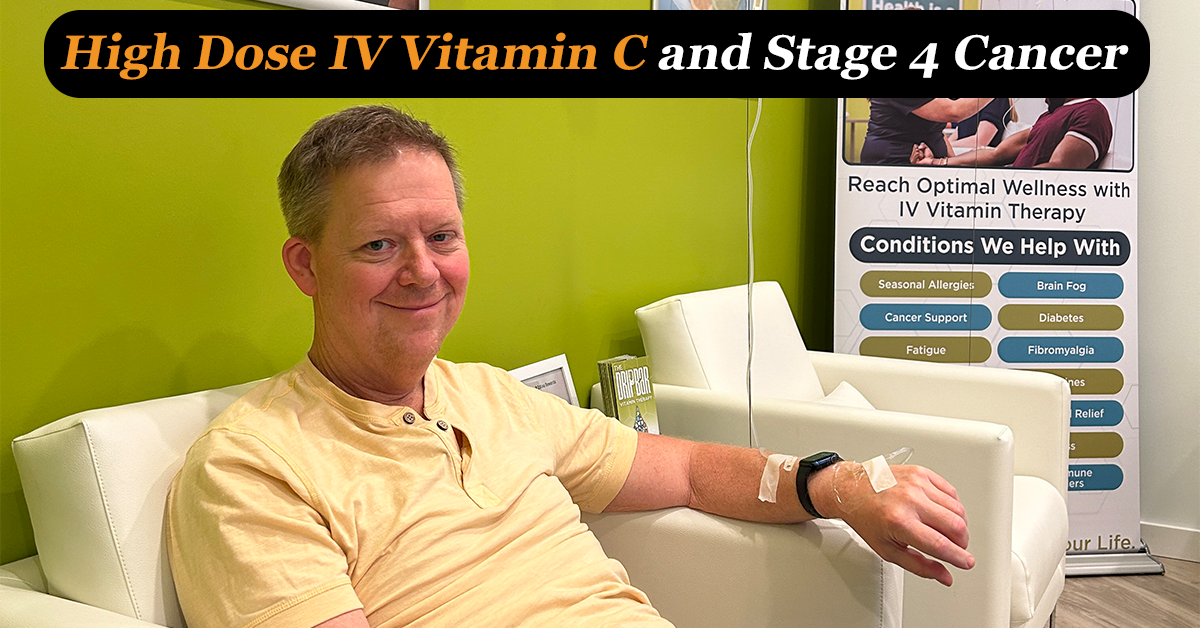
I want to shift from the scientific explanation to my own story. I am Wayne. I have been fighting stage four cancer.
Over the course of four years, my body endured seventy radiation treatments, more than twenty chemotherapy infusions, and a five-hour radical neck dissection performed by three surgeons. The surgery removed tissue and lymph nodes from my neck. The damage left me with significant nerve injury in my shoulder and neck. My vocal cords were affected and my voice is not strong.
Despite everything, the cancer continued to return.
On June 3, 2025, my wife and I read a biopsy report on my phone that changed everything. The cancer had reached stage four and had spread to my lungs. Four nodules were visible in my lungs.
My oncologist recommended additional chemotherapy along with immunotherapy using Keytruda. My body simply could not tolerate more chemotherapy. The neuropathy in my neck and shoulder was already severe. I had to make difficult decisions about what treatments I could realistically endure.
That was the moment when I began researching high dose IV vitamin C.
Like many patients, I had never heard of it before. I started reading medical literature. I spoke with physicians and integrative medicine providers. I talked with other patients who had undergone the therapy.
What I learned was that high dose IV vitamin C was very different from taking vitamin C supplements. Instead of milligrams, the doses are measured in grams. My treatments involve seventy five grams infused intravenously.
That is a very large amount delivered directly into the bloodstream under medical supervision.
Finding a Provider
One challenge many patients encounter is simply finding a clinic that offers high dose IV vitamin C. Not all oncology practices provide it. Insurance coverage can vary, and regulations differ between states.
After searching and speaking with several clinics, I eventually found a provider near me. The Drip Bar in Edina, Minnesota, offered high dose vitamin C infusions. They required proper medical screening and testing before treatment began.
The staff there have been professional and supportive throughout my treatment. They monitored my lab work and ensured I met the requirements for therapy, including the G6PD enzyme screening that I mentioned earlier.
For patients considering this therapy, it may take time to locate a qualified provider. Integrative oncology clinics, functional medicine practices, and some hospital research programs may offer it.
My Treatment Plan
My treatment approach combined several strategies under medical supervision.
First, I began immunotherapy using Keytruda as recommended by my oncology team.
Alongside immunotherapy, I received high dose IV vitamin C infusions twice per week at seventy five grams per infusion.
I also focused on correcting nutritional deficiencies. My vitamin D levels had previously been very low, so I worked to raise them into an optimal range. I also supplemented magnesium and zinc, both of which play important roles in immune function.
Additionally, I incorporated several repurposed medications that researchers have been studying for potential anticancer effects. Every element of my plan involved research, medical consultation, and careful monitoring.
What Happened Next
The results unfolded over several months.
My first follow up scan showed the lung nodules beginning to shrink. Out of the four nodules identified earlier, all had reduced in size by roughly fifty percent.
The next scan showed even more encouraging results. Two of the lung nodules were no longer detectable. The remaining two had shrunk again by approximately fifty percent.
Finally, the most recent scan showed that the two remaining nodules were extremely small and stable.
For me, these results were remarkable. They occurred while combining immunotherapy, high dose IV vitamin C, nutritional optimization, and repurposed medications.
Every patient is different. What worked for me may not work for someone else. Cancer biology is complex and treatment decisions must always be made with qualified physicians.
But I believe it is important to share what happened in my case because so many patients ask about this therapy.
Questions Patients Ask Me Every Day
Since beginning this journey, I have received the same questions repeatedly.
What is high dose IV vitamin C
High dose IV vitamin C is a medical infusion where vitamin C is delivered directly into the bloodstream in very large amounts. Doses are typically measured in grams rather than milligrams and are administered under medical supervision.
How is IV vitamin C different from taking vitamin C pills?
When vitamin C is taken orally, the digestive system tightly controls how much enters the bloodstream. Intravenous vitamin C bypasses this limitation and allows much higher blood concentrations that may affect cancer cells differently.
How does IV vitamin C affect cancer cells?
Research suggests pharmacologic vitamin C may generate hydrogen peroxide in the tumor environment. Healthy cells can neutralize this compound, while some cancer cells are more vulnerable to oxidative stress.
Is IV vitamin C approved as a cancer cure?
High dose IV vitamin C is not considered a cure for cancer. Most research studies evaluate it as a complementary therapy used alongside conventional treatments such as chemotherapy, radiation, or immunotherapy.
Why do patients need G6PD testing before IV vitamin C?
Patients must be tested for glucose 6 phosphate dehydrogenase deficiency. This enzyme protects red blood cells from oxidative damage. Without it, high dose vitamin C could cause complications.
I cannot answer what anyone else should do medically. I am not a physician and I cannot provide medical advice.
What I can do is explain what I learned, what the research says, and what I personally experienced.
High dose IV vitamin C is not the same as taking vitamin C pills. The infusion allows blood concentrations that cannot be achieved orally. At those levels, vitamin C may generate hydrogen peroxide in the tumor environment, potentially stressing cancer cells while leaving healthy cells protected.
Researchers continue to study how this interacts with chemotherapy, radiation, and immunotherapy.
My own experience suggests that it can be part of a broader strategy to support the body while fighting cancer.
Why This Conversation Matters
Cancer patients deserve access to information. Many people facing serious illness feel that they must search tirelessly for answers. They read medical journals, listen to podcasts, speak with other patients, and try to understand complicated science while navigating fear and uncertainty.
High dose IV vitamin C is one of several therapies being explored in integrative oncology. It does not replace conventional treatment, but it may complement it for some patients.
The scientific community continues to study its mechanisms, safety, and effectiveness. New clinical trials are underway around the world.
For patients who want to explore every reasonable option, understanding this therapy can be part of that journey.
A Final Word to Patients and Families
If you are facing cancer today, you are not alone. Many people are searching for answers, for hope, and for ways to strengthen their bodies during treatment.
High dose IV vitamin C is one option that deserves careful discussion with your medical team. It requires medical supervision, proper screening, and coordination with oncologists.
Do your research. Ask questions. Work closely with physicians who are open to reviewing scientific evidence and discussing integrative approaches.
My journey is still unfolding, but sharing information like this is one way I can help others who are walking the same difficult road.
If my experience encourages even one patient to explore new possibilities with their doctor, then telling this story will have been worthwhile.
Scientific references
Padayatty SJ et al. Vitamin C pharmacokinetics implications for oral and intravenous use. Annals of Internal Medicine. 2004.
Chen Q et al. Pharmacologic ascorbic acid concentrations selectively kill cancer cells. Cancer Cell. 2005.
Yun J et al. Vitamin C selectively kills KRAS and BRAF mutant colorectal cancer cells. Science. 2015.
Welsh JL et al. Pharmacological ascorbate with gemcitabine for pancreatic cancer. Cancer Chemotherapy and Pharmacology. 2013.