A chapter from Still Here: How Faith, Food, and Family Beat Stage Four Cancer
Let me start with something that matters: I respect doctors.
I owe part of my life to the oncologists, surgeons, nurses, and radiologists who helped carry me through some of the darkest valleys I have ever walked. They are good people doing hard work inside a broken system. And that system has a giant blind spot.
That blind spot is nutrition.
Doctors Know Disease. Most Don’t Know Food.
This is not a criticism of the people. It is a criticism of the training.
A 2015 study published in Academic Medicine found that only 27% of U.S. medical schools meet the minimum 25 hours of nutrition education recommended by the National Academy of Sciences. The average is closer to 19-20 hours over four years of medical school. Many schools offer fewer than 10.
Meanwhile, medical students spend hundreds of hours on pharmacology, pathology, and anatomy.
You can become a board-certified oncologist without learning how diet affects inflammation, insulin levels, metabolic health, or immune function.
That leaves patients with a dangerous contradiction: the people trusted to treat cancer are rarely trained in one of the most powerful tools available to support the body during that fight.
The Inflammation Problem Nobody Talks About
Inflammation is not just discomfort. It is fuel for cancer.
Chronic inflammation promotes cancer cell growth, helps tumors evade immune detection, stimulates blood vessel formation that feeds tumors, and creates a microenvironment where cancer thrives. Research published in Nature Reviews Cancer identifies chronic inflammation as one of the recognized hallmarks of cancer.
Yet very few oncologists ever ask: What oils do you cook with? How much sugar are you eating? How stable is your blood sugar?
The conversation focuses on chemotherapy schedules and medication management, as if food is a separate topic that does not matter. Meanwhile, the body is reacting to every bite, every glucose spike, every inflammatory ingredient, every seed oil.
It is like trying to put out a fire while someone keeps pouring gasoline on it.
“Just Eat Whatever You Can Keep Down”
This is the dietary advice I heard most often during treatment, and it sounds gentle and supportive on the surface. In reality, it is harmful.
Calories from sugar, seed oils, and processed carbohydrates do not nourish a body fighting cancer. They destabilize it. They inflame it. They make it harder for the immune system to do its job.
Consider the difference between 100 calories from a ribeye steak and 100 calories from a fruit juice box. The steak provides complete protein, bioavailable vitamins, and healthy fats, and helps stabilize blood sugar. The juice delivers 25 or more grams of pure sugar, spikes insulin, promotes inflammation, and provides almost no nutrition.
These are not equivalent. Not even close.
The Warburg Effect: Cancer Runs on Sugar
One of the most surprising blind spots in oncology is how rarely doctors address glucose in their dietary recommendations.
Cancer cells are metabolically dependent on sugar. They consume glucose at 10 to 50 times the rate of normal cells. This is called the Warburg effect, discovered by Nobel Prize-winning scientist Otto Warburg in the 1920s. Doctors use PET scans to detect cancer by tracking radioactive glucose because cancer consumes sugar faster than anything else in the body.
Yet the standard dietary advice given to cancer patients is full of high-carb foods that keep glucose elevated all day. Juice. Crackers. Nutritional shakes loaded with sugar. Granola bars for energy.
Patients are literally feeding the cancer while trying to fight it with chemotherapy.
What Happened When I Changed My Diet
I adopted a strict carnivore diet in June 2025. Within weeks, the results were measurable and undeniable.
My fasting glucose, which had been spiking into pre-diabetic ranges between 140 and 176 mg/dL, consistently stabilized at 87 to 100 mg/dL. My inflammation markers dropped. My energy stabilized with no more afternoon crashes or brain fog. I lost 50 pounds of fat, going from 205 to 155 pounds, while maintaining muscle through daily strength training.
My kidney function remained excellent despite eating 150 to 200 grams of protein daily. GFR stayed above 60. Creatinine stayed well within normal range. The “protein destroys your kidneys” warning, repeated constantly, was not supported by my labs or by the research.
And my tumors? My December 2025 CT scan showed two lung nodules completely undetectable and two others dramatically smaller.
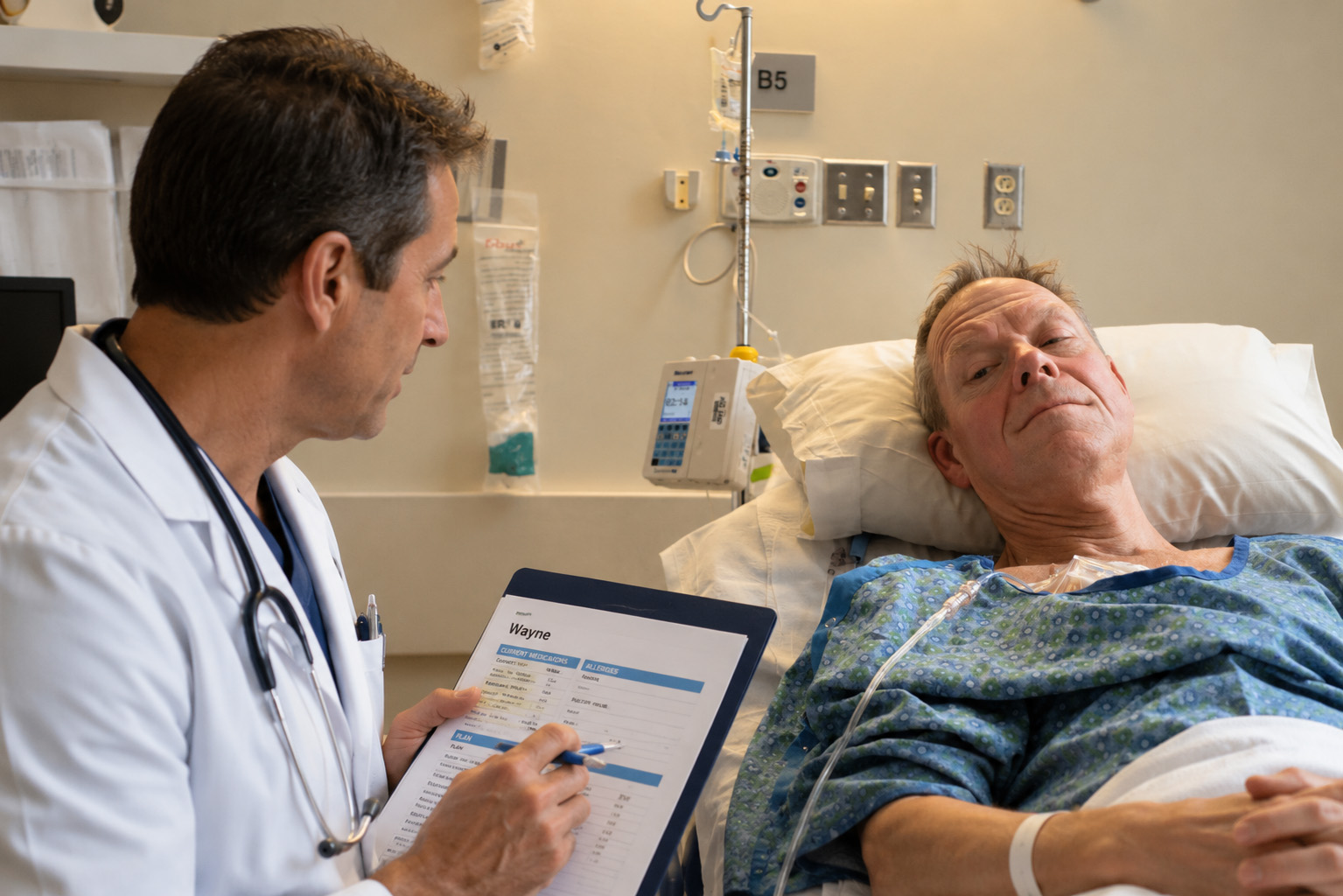
My oncologist never once asked what I changed in my diet.
Not once.
The System Is Not Designed to Ask
When I brought up the carnivore diet, the response was polite skepticism. “That’s interesting. Just make sure you’re getting enough calories.”
No curiosity about why my inflammation markers dropped. No questions about why my bloodwork improved. No connection between my metabolic changes and my tumor response.
Because he was not trained to think that way.
Doctors are trained to fight disease, not to strengthen the patient. They know how to shrink tumors, kill cancer cells, and manage side effects. But they are rarely trained to rebuild a damaged immune system, reduce inflammation through diet, stabilize metabolism, or teach patients how to nourish themselves during the hardest fight of their lives.
They treat the battlefield. But not the soldier.
What You Can Do Right Now
If you or someone you love is facing cancer, do not wait for your oncologist to bring up nutrition. They probably will not.
Educate yourself on how food affects inflammation, insulin, and immune function. Ask for vitamin D levels, inflammatory markers like CRP, and fasting glucose at your next appointment. Consider whether a low-carb or metabolic approach might support your treatment. Find practitioners who understand integrative oncology.
And above all, advocate for yourself. Your results are data. Your body is telling a story. Make sure someone is listening.
The Bottom Line
Food did not cure my cancer. But it gave my body the metabolic foundation it needed to fight back.
Six months after starting carnivore, two of my lung tumors were undetectable. My energy was the best it had been in years. My bloodwork was outstanding. And I was still here.
That is what doctors get wrong. They do not see food as medicine.
But I do. Because I lived it.
This post is adapted from Chapter 13 of Still Here: How Faith, Food, and Family Beat Stage Four Cancer by Wayne Schlicht. If this resonated with you, the full chapter includes Wayne’s complete blood sugar data, kidney function labs, and metabolic panel results across six months of the carnivore diet. Read more about Wayne’s journey and find the book at WaynesCancerJourney.com